
Picture this: You walk through the front door after a long day. Shoes get kicked off. Mail lands on the nearest surface. Keys go… somewhere. A bag drops to the floor. And just like that, the entryway turns into a mess.
It happens fast. And once it starts, it spreads.
Here’s the truth: the entryway sets the tone for your entire home. When it’s messy, everything feels messy. When it works, the rest of the house feels easier to manage.
Designing an entryway that stays clean isn’t about being perfect. It’s not about forcing everyone to follow strict rules. It’s about practical design choices that cut down on mess: smart layout, smart storage, and easier upkeep.
This guide walks through exactly how to do that. No Pinterest-perfect fantasy. Just real strategies you can use right away.
Before adding storage or décor, rethink what the entryway is meant to handle.
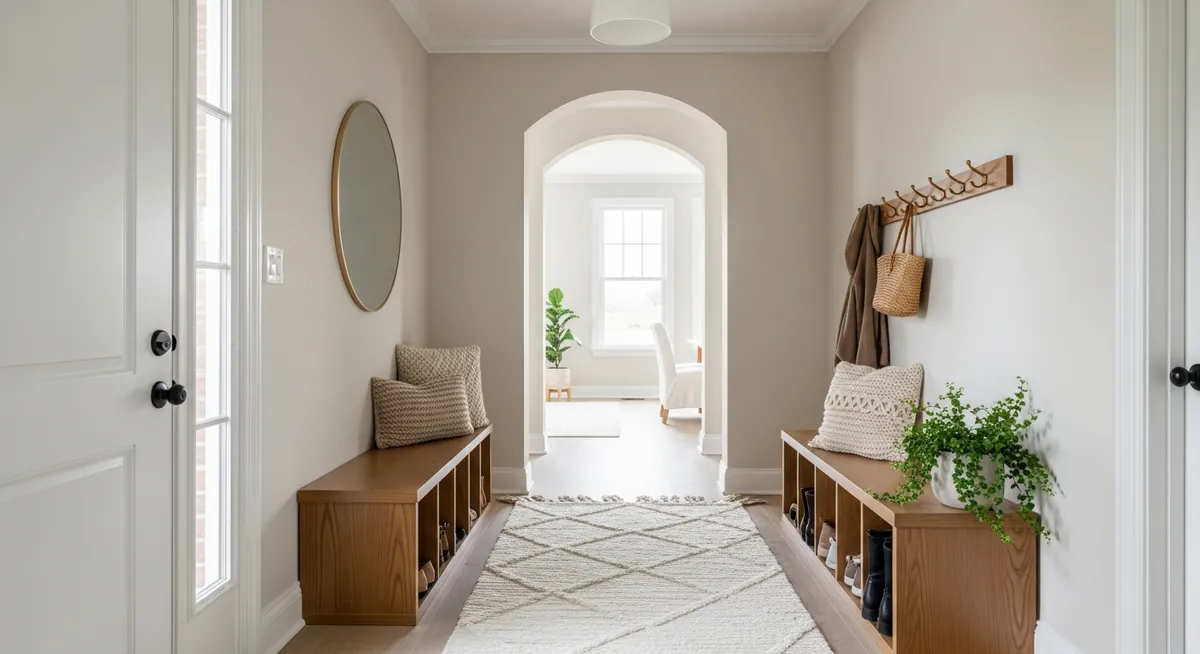
Most entryways fail because they don’t control movement.
When there’s no clear path, dirt spreads everywhere. Bags land wherever. Shoes pile up randomly. Clutter creeps into living areas.
A good layout solves this before it starts.
Why Layout Matters
Clear walking paths cut down on how far dirt travels into your home. When people know exactly where to walk, they move through the space without spreading mess.
Defined zones stop clutter from bleeding into other rooms. The entryway should feel like its own area, not just part of the living room or hallway.
Furniture placement should guide movement, not block it. Every piece should have a purpose. If it doesn’t help with traffic flow or storage, it’s likely making things harder.
Easy Ways to Improve Your Layout
Keep the central pathway open. No tables in the middle. No chairs blocking the natural flow. Just a clear, direct route from the door to the rest of the house.
Put shoe storage right beside the door. Not across the room. Not in a closet down the hall. Right where shoes come off. The easier it is to put them away, the more likely it happens.
Skip the extra décor. A single mirror or small plant works. Five items fighting for attention creates visual noise and collects dust.
If clutter builds up fast in this area, it may mean the space lacks structure. This guide on understanding visual clutter can help you spot what’s overwhelming your space and how to simplify it naturally.
The layout shouldn’t need constant attention. It should quietly direct behavior.
When the walking path is clear, when storage is right where you need it, when furniture helps movement instead of blocking it — the space takes care of itself.
2. Choose Storage That Makes Putting Things Away Easy
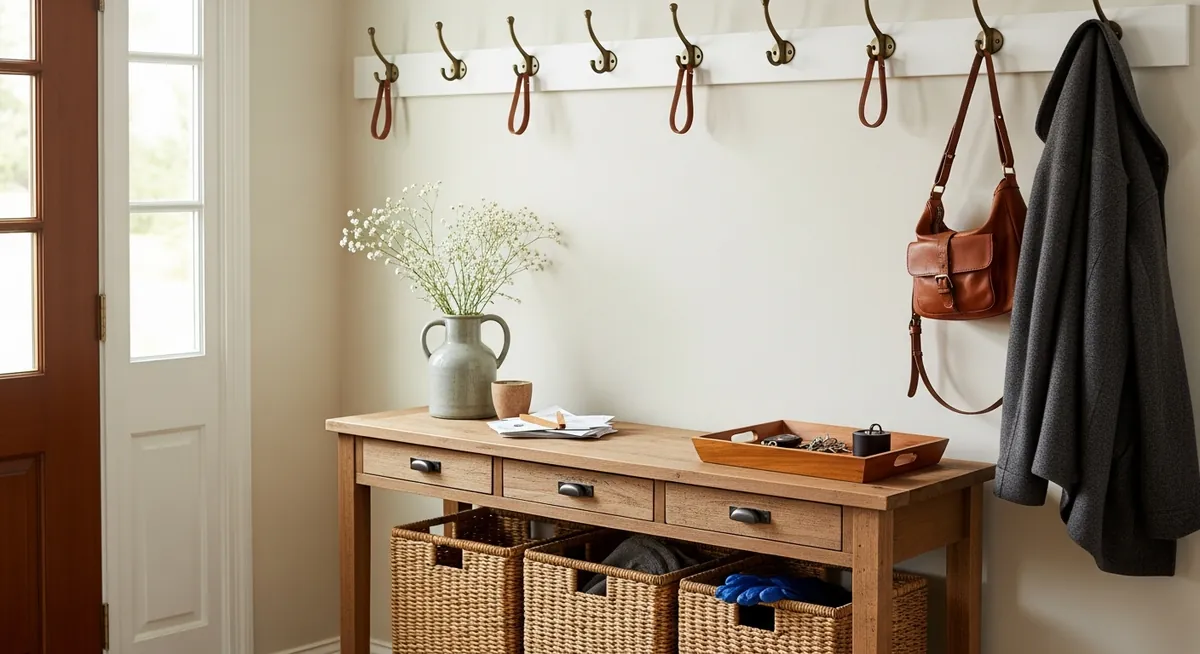
Storage only works if people use it.
If putting something away takes extra steps, it won’t happen. Coats will land on chairs. Shoes will pile up. Mail will scatter.
The key is making storage so simple that using it feels automatic.
Why “Easy” Is Key
Think about how things land in the entryway. Coats come off right away. Shoes get kicked off. Keys need a home. Bags drop to the floor.
Storage should match those exact movements.
When you have to open a closet, find a hanger, and arrange a coat neatly, that’s too much work. Most days, people won’t do it.
When you can hang a coat on a wall hook in one motion, that’s easy. It happens on its own.
Storage Types That Work
Wall hooks are the easiest fix for coats and bags. Mount them at different heights if kids use the space. One hook per person stops overcrowding.
Slim cabinets keep shoes contained without eating up floor space. Closed storage hides visual clutter better than open shelves. If you have pets or kids, closed storage is even more helpful.
Baskets work well for everyday grab-and-go items. Gloves, dog leashes, shopping bags — things that don’t need a drawer but shouldn’t sit out.
A small tray or bowl for keys and mail stops surface clutter. One spot means no more daily search for lost items.
The easier it is to put something away, the less likely it sits out.
If your entryway feels busy even when it’s tidy, simplifying décor can make a big difference. This article on reducing visual clutter explains how small design choices can instantly calm a space.
Storage doesn’t need to be fancy. It just needs to be exactly where you need it.
3. Add Protective Layers That Trap Dirt Before It Spreads
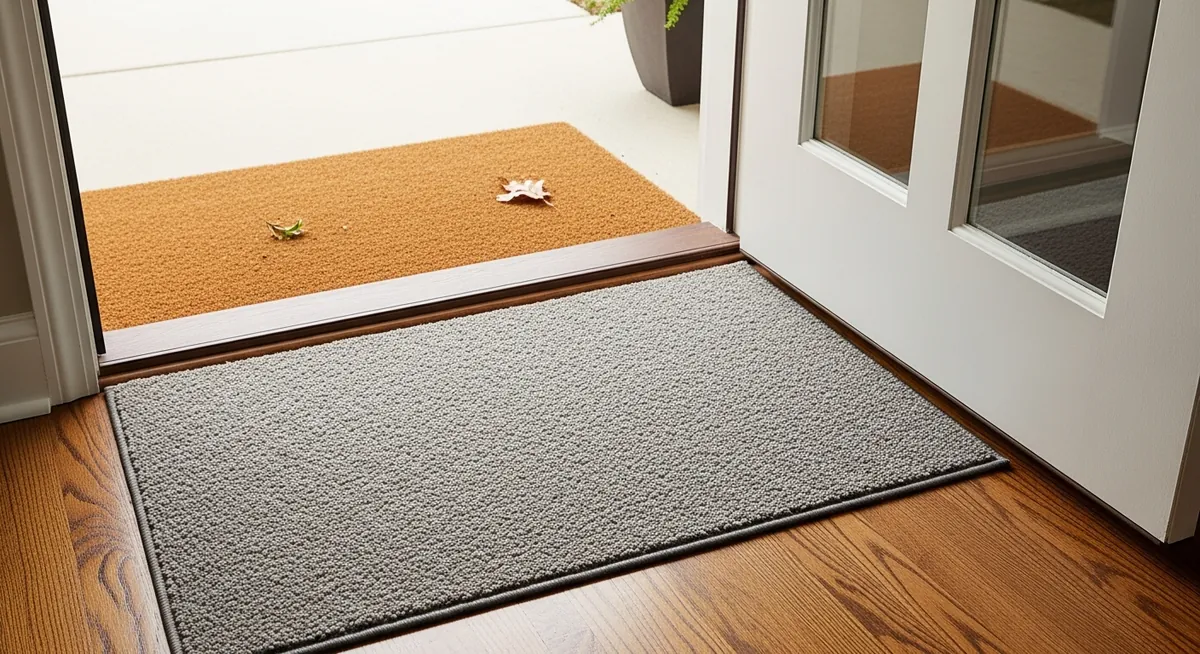
Most mess enters your home on shoes, paws, and bags placed on the floor.
If you can stop dirt at the door, you cut down on how much cleaning the rest of the house needs.
Why Protection Comes First
Think about what walks through your entryway every day:
- Shoes carrying outdoor dirt, mud, salt, and debris
- Pet paws after walks or time in the yard
- Bags and backpacks that sit on floors, sidewalks, and car trunks
Without protective layers, all of that spreads into your living spaces within minutes.
With the right setup, most of it stays near the door.
Design Solutions That Work
An outdoor mat removes bigger debris before anyone steps inside. Coarse texture works best. It doesn’t need to look pretty; it needs to scrape dirt off shoes.
An indoor washable rug catches finer dirt that makes it past the first mat. Choose something tough and machine-washable. When it gets dirty, toss it in the wash instead of scrubbing it by hand.
Tough flooring near the door handles heavy traffic without showing every scuff and scratch. Tile, sealed concrete, or engineered wood work well. Skip delicate materials that need constant care.
Easy-to-clean wall surfaces near the entrance stop permanent marks from bags, strollers, and daily contact. Semi-gloss paint wipes down easily. Sealed wood or tile adds strength.
Layered protection cuts down on how far dirt travels into your home.
High-traffic entryways collect dust and debris faster than most areas. When routine cleaning no longer feels like enough, occasional support from a professional deep cleaning service can help reset buildup in corners, baseboards, and flooring seams.
The goal isn’t to stop all dirt because that’s not possible. The goal is to stop it before it spreads beyond the entryway.
When protective layers do their job, the rest of your home stays cleaner with less effort.
4. Make Cleaning Part of the Design
Practical design choices aren’t just about stopping clutter. They’re also about making the inevitable cleaning easier.
Some materials and layouts need constant scrubbing. Others naturally resist dirt and wipe clean in seconds.
Choosing the right finishes upfront saves hours of upkeep later.
Design for Easy Upkeep
Wipeable surfaces are a must in an entryway. Sealed wood, laminate, or semi-gloss painted walls handle spills and scuffs without permanent damage. Flat paint shows every fingerprint. Textured wallpaper traps dust.
Skip heavy textures that trap dirt. Thick woven rugs, plush fabrics, and intricate décor collect debris in places you can’t easily reach. Smooth, simple surfaces clean faster.
Keep décor minimal. Every item you place in the entryway is something you’ll need to dust, move, or clean around. A single mirror or plant works. Five objects create extra work.
Pick closed storage over open shelving if dust buildup is common. Open shelves look airy but need constant dusting. Closed cabinets hide clutter and keep items cleaner longer.
Small Habits That Protect the Space
Design helps, but a few simple habits keep the space working long-term.
Daily shoe removal policy — not strict, just consistent. When shoes come off at the door instead of tracking through the house, cleaning gets much easier.
Weekly quick vacuum or sweep takes under five minutes and stops dirt from settling into flooring or rugs. A small handheld vacuum near the entryway makes this nearly effortless.
Sort incoming mail right away to stop paper piles. A small recycling bin or shredder near the door gets rid of the “I’ll deal with this later” pile.
The goal is not constant deep cleaning. It’s lowering the effort needed to keep the area clean.
When the design supports easy upkeep, cleaning becomes a quick reset instead of a frustrating chore.
5. Keep the Entryway Emotionally Calm
An entryway affects how you feel when you walk into your home.
If it’s chaotic, cluttered, or visually overwhelming, that feeling follows you inside. If it’s calm and clear, the entire house feels more manageable.
This isn’t about looks. It’s about daily mental load.
Don’t Overload the Space
Too many baskets feel chaotic instead of organized. One or two baskets work. Five baskets fighting for attention create visual noise.
Too many decorative items collect dust and demand attention. A single piece — a mirror, a small plant, art — adds warmth. Multiple objects create clutter.
Too much open shelving becomes visual noise. Open shelves work in some spaces, but in an entryway where items constantly move, closed storage creates calm.
A Calm, Simple Entryway
When the entryway is visually calm, it:
- Feels lighter when you walk through the door
- Is easier to maintain because there’s less to clean around
- Encourages tidiness because putting things away feels natural
This doesn’t mean sterile or empty. It means intentional.
Every item should serve a clear purpose. Storage, function, or genuine emotional value. If it doesn’t do one of those things, it’s likely adding visual weight without benefit.
When you remove the excess, what’s left feels more intentional. The space breathes. And oddly enough, it stays cleaner with less effort.
Conclusion
A clean entryway is not about constant cleaning. It’s about thoughtful design.
Smart layout controls traffic and stops dirt from spreading deeper into your home. Clear pathways, defined zones, and strategic furniture placement guide movement naturally.
Simple storage makes tidying automatic. Wall hooks, slim cabinets, baskets, and trays get rid of the friction that causes clutter buildup.
Protective layers cut down on how much dirt enters the house. Outdoor mats, washable rugs, and tough flooring trap debris before it spreads.
Easy-to-clean materials lower daily upkeep. Wipeable surfaces, minimal décor, and closed storage keep the space working without constant effort.
Visual simplicity maintains calm. A few intentional pieces feel better than a cluttered collection of items.
When the entryway works well, the rest of the house feels easier to manage. A small design shift near the front door can cut down on daily frustration more than most large home upgrades.
You don’t need a complete renovation. You just need practical design choices that reduce mess, choices that match how you actually live instead of forcing an unrealistic ideal.
Start with one change. Rethink the layout. Add a protective mat. Simplify the storage. See what shifts.
Small adjustments near the door create a ripple effect throughout your entire home.


