
You walk through your living room at night, and all looks fine. Surfaces gleam under the warm glow of your lamps. The room feels cozy and put together.
Then morning comes.
Sunlight streams through the windows. Now you see dust on the coffee table. Smudges on the mirror. A film on surfaces that looked clean twelve hours ago.
Nothing changed overnight. The room is just as you left it. But somehow, it looks totally different.
That’s lighting at work.
How lighting affects how clean your home looks isn’t just about brightness. It’s about what gets shown, what gets hidden, and how our eyes read texture, shadow, and reflection. A spotless room can look dingy under harsh overhead lights. A room that needs work can feel nice with the right lamp setup.
Getting this changes how you clean and keep up your space. Because sometimes, the fastest way to make a room look cleaner isn’t more dusting. It’s moving where the light falls.

Daylight doesn’t lie.
When natural light floods a room, it shows all that fake lighting tends to soften. Dust particles in the air become easy to see. Streaks on glass catch the light just right. Uneven mopping shows up as dull patches on wood floors. Wall scuffs you never saw at night now demand your eyes.
South-facing rooms get the most intense sun all day. That means dark colors can look brighter, but it also means flaws become more clear. North-facing rooms get softer, more spread-out light that creates a warmer effect but can make dirt in corners harder to spot.
Here’s what sunlight often shows:
- Dust on flat surfaces like tables, shelves, and windowsills
- Smudges and fingerprints on mirrors, glass doors, and picture frames
- Uneven cleaning patterns on floors and countertops
- Wall scuffs and baseboard buildup along edges
- Textured surfaces that trap dust and grime
The truth of natural light explains why some rooms feel clean at night but look off by 10 a.m. It’s not that the room got dirtier. You’re just seeing it under different conditions.
This is why cleaning during daylight hours makes sense. You’re working with the most honest light your home will see. What looks clean in sunlight will surely look clean at night. The reverse isn’t always true.
For high-traffic spaces where natural light makes every detail count, keeping things clean becomes key. Professional house cleaning services can help keep those sun-exposed areas looking their best, mainly in rooms with large windows or skylights.
Overhead Lighting vs Layered Lighting
A single ceiling light does one job: it lights a room. But it doesn’t always make the room look good.
Only Overhead Lighting
When you rely only on recessed lights or a central ceiling light, you create harsh downward shadows. Dust on ceiling fans becomes more easy to see. Flat surfaces look stark and cold. The light has nowhere to bounce, so it just falls straight down and stops.
Rooms lit this way often feel cold. Clean, maybe. But not cozy.
The bigger issue is what overhead lighting shows. Every flat surface catches direct light, which means every speck of dust, every crumb, every water spot gets shown off. Vertical surfaces fall into shadow, making wall texture look uneven.
Layered Lighting
Now add a table lamp in one corner. A floor lamp next to the sofa. Maybe a sconce on the wall.
Now the room breathes.
Layered lighting spreads light sources at different heights and angles. This creates depth. Shadows soften. Surfaces look smoother because light hits them from many directions instead of one harsh point above.
The room doesn’t just look cleaner. It feels warmer and more thought-out.
Lighting affects how we see things in ways that go beyond simple brightness. When light comes from varied sources, your eye moves around the room more naturally. You notice the overall feel instead of staring at single flaws.
This doesn’t mean overhead lighting is bad. It means it works best as part of a system, not as the only source.
The Role of Light Temperature in How Clean Things Look
Not all white light is the same.
Light temperature, measured in Kelvins, decides whether a bulb casts a warm yellow glow or a cool blue-white tone. And that temperature changes how clean surfaces look.
Warm Light (2700K-3000K)
Best for: Living rooms, bedrooms, dining areas
Creates a cozy, inviting feel. Makes wood tones look richer. Softens harsh edges and flaws.
Possible downside: Can make white surfaces look creamy or slightly yellow. In kitchens and bathrooms, this warmth sometimes makes it harder to see streaks, soap scum, or food bits clearly.
Neutral White (3100K-4000K)
Best for: Kitchens, bathrooms, workspaces
Offers a clean, crisp look without feeling cold. Shows true colors more clearly. Makes it easier to spot dirt, grime, and areas that need work.
Possible downside: Can feel slightly cold in spaces meant for rest. Not ideal for creating cozy evening vibes.
Cool White (4500K-6500K)
Best for: Garages, laundry rooms, task-focused work spaces
Very bright and energizing. Great for detailed work. Shows every flaw with harsh clarity.
Possible downside: Can make dust and minor flaws look worse. Makes spaces feel less cozy for daily living. Often too harsh for home use.
The takeaway? Kitchens and bathrooms benefit from neutral white lighting because cleanliness matters most in those spaces. You want to see the grease splatter, the toothpaste spots, the water marks.
Living areas work better with warm light because comfort takes priority. A slightly softer glow makes the space feel lived-in rather than sterile.
Being consistent also matters. When you use different light temperatures in connected spaces, it creates visual breaks. Your eye notices the shift, and rooms can feel split even when they’re clean.
Shadows, Reflections, and Why Some Rooms Look Dirtier
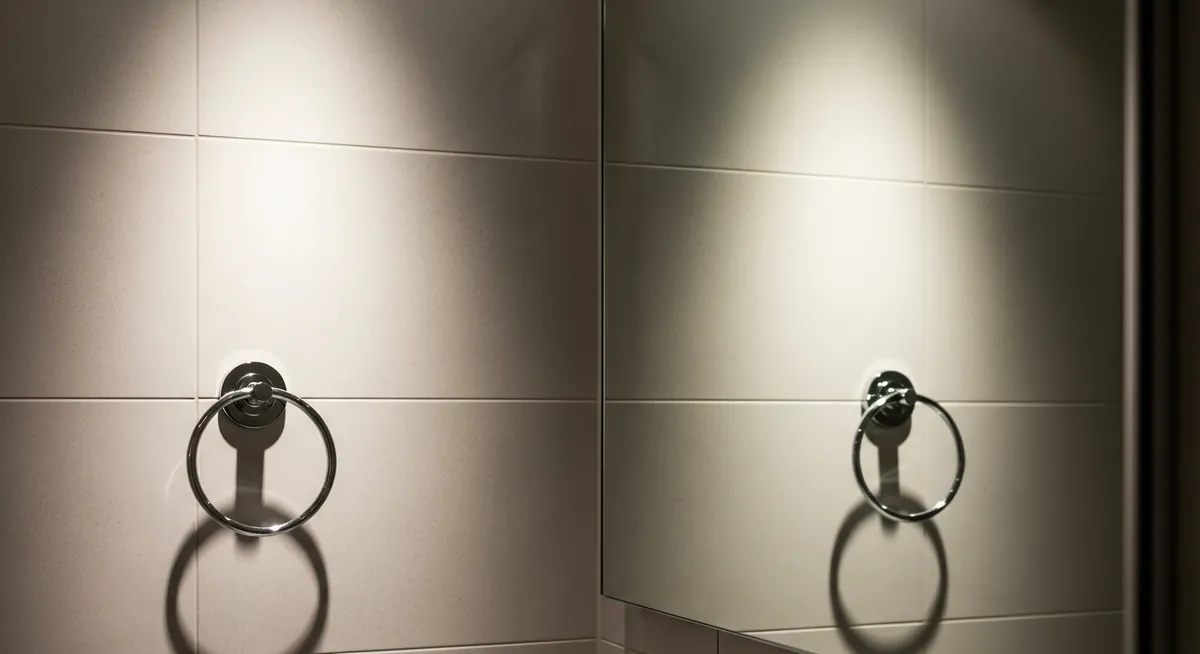
Shadows don’t just hide dirt. They create it visually.
When light hits a textured wall from the side, every tiny flaw casts a shadow. A wall that looks smooth under spread-out light now shows bumps, nail holes, and uneven paint. The wall hasn’t changed. The lighting has.
The same rule applies to glossy surfaces. Mirrors, glass shower doors, stainless steel appliances—they all reflect light right back at you. And when light bounces off at certain angles, fingerprints and smudges become hard to miss.
Bathrooms and kitchens are extra sensitive to this because they mix reflective surfaces with high moisture. Water spots dry on faucets. Soap residue builds up on glass. Grease settles on backsplashes. Under the wrong lighting, all of it becomes bigger.
Downlighting—light that shines straight down—shows flat surfaces. Great for seeing dust on countertops. Not great for hiding it.
Side lighting shows texture and creates strong shadows. Beautiful for accent walls. Problem for walls that aren’t perfectly smooth.
Uplighting softens shadows and creates ambient glow. Useful for mood. Less useful for task-focused spaces where you need clarity.
The challenge is balancing what you want to see with what you want to soften. In a bathroom, you need enough light to apply makeup or shave well. But you don’t always want every water spot on the mirror screaming for your eyes.
Diffused lighting helps. Instead of one harsh spotlight, use multiple softer sources. Instead of a single bulb over the mirror, add sconces on either side. The light wraps around your face instead of creating hard shadows, and the mirror shows fewer streaks because light isn’t hitting it from one focused point.
For areas where reflective surfaces and moisture create ongoing upkeep challenges—like tile, glass shower doors, and mirrors—periodic deep cleaning services help reset those high-care zones. Regular attention keeps buildup from becoming easy to see under any lighting condition.
Small Changes That Instantly Improve How Clean Your Home Looks

You don’t need to rewire your house to make it look cleaner. Small tweaks create big shifts in how a space feels.
Add a floor lamp in dark corners to reduce heavy shadows
Corners tend to collect visual weight when they’re poorly lit. A simple floor lamp brightens the space and makes the whole room feel more open. Bonus: it removes the shadowy areas where dust tends to hide.
Swap harsh bulbs for neutral white in kitchens and bathrooms
If your kitchen feels dingy despite regular cleaning, check your bulb temperature. Switching from warm yellow (2700K) to neutral white (3500K) makes countertops, sinks, and appliances look clearly cleaner without changing anything else.
Clean light fixtures regularly
Dusty lampshades and grimy ceiling lights reduce light output by up to 30%. A quick wipe-down every few weeks keeps light levels steady and prevents that dull, shadowy feeling that makes rooms look neglected.
Use consistent bulb temperature in open spaces
When your living room uses warm bulbs but the next-door kitchen uses cool white, the contrast feels jarring. Stick to one temperature range in connected areas so the flow feels smooth rather than random.
Open curtains fully during daytime
Partially open curtains create uneven light spread and cast shadows across the room. Fully open or fully closed works better. Let natural light flood in fully, or control it with purpose. Halfway creates visual mess.
Position mirrors to reflect light, not clutter
A mirror across from a window doubles natural light. A mirror reflecting a messy countertop doubles visual chaos. Adjust placement so mirrors bounce light into dim areas rather than making problem spots bigger.
Replace old yellowed lampshades
Fabric lampshades soak up dust and discolor over time. That yellowed shade filters light into a sickly tone that makes all look aged. A fresh white or neutral shade instantly brightens the space.
These aren’t huge renovations. They’re small tweaks that shift how light moves through your home. And when light moves better, cleanliness becomes more easy to see.
Conclusion
How lighting affects how clean your home looks comes down to what gets shown and what gets softened. Good lighting doesn’t replace regular cleaning. But it changes how your effort shows up.
A well-lit home feels thought-out. Surfaces look crisper. Shadows don’t hide neglected corners. Reflections don’t make every fingerprint look worse.
Start by watching your space at different times of day. Notice where natural light shows dust you missed at night. Pay attention to rooms that feel dingy despite being clean. Check your bulb temperatures. Add a lamp where shadows pool.
Lighting affects more than brightness. It shapes how a space feels, how clean it looks, and how much upkeep seems needed.
Small shifts create real change. And sometimes, the fastest way to make a room look cleaner is simply letting it be seen properly.


