
You know that moment when you walk into your house the morning after cooking fish, and the smell hits you? Like you’re still at the stove? I’ve been there. Everyone has.
The frustrating part is that you opened a window. You ran the fan. And somehow the smell still moved into the living room. It decided to live in your sofa cushions for three days.
Here’s what most people don’t realize: how to stop cooking smell from spreading isn’t about air fresheners or opening more windows. It’s about understanding how cooking smells actually move through your home.
And once you know that, the solutions make a lot more sense.
Let me walk you through what’s really happening when you cook. Why that extractor fan might not be doing what you think. And what actually works to keep cooking odors where they belong.
When you cook, you’re not just making dinner. You’re creating warm air that carries smell particles. And that air behaves in predictable ways.
Warm air is lighter than cool air. It rises and moves outward from the cooking zone. Think of it like invisible smoke. You can’t see it, but you can definitely smell it.
In an open-plan home, nothing stops that cooking air from drifting into your living area. As it moves and cools, those smell particles settle onto every soft surface they touch. Your sofa. Your curtains. The carpet.
This is why your living room smells like last night’s stir-fry the next morning. The smell isn’t floating in the air anymore. It’s been absorbed into the fabric. And it’s slowly releasing back out as the room temperature changes.
Even if you have a closed kitchen door, warm cooking air doesn’t just stay put. It escapes through the gap under the door. And around poorly sealed frames. This happens whenever there’s enough pressure difference between the kitchen and the next room.
The kitchen gets warmer when you cook. That creates pressure. And pressure finds a way out.
Recirculating vs Ducted Extraction — Why It Matters
Most extractor fans in US homes don’t actually extract air to the outside. They recirculate it.
Here’s what that means: the fan pulls cooking air through a charcoal filter. It removes some of the smell. Then it releases the filtered air back into your home. It reduces the smell in the kitchen, sure. But it doesn’t remove the air that’s carrying the smell. It just cleans it a bit and puts it back.
Ducted extraction is different. It vents to the outside. The cooking air leaves your home entirely. It takes the smell with it. This is much more effective at preventing cooking smell from reaching other rooms.
If you’re not sure which type you have, try the tissue test. Hold a sheet of kitchen paper to the extractor grille with the fan running. If suction holds it in place, the fan motor works.
But here’s the thing: in a recirculating model, that test only tells you the motor works. It doesn’t tell you the smell is leaving the building. Because it isn’t.
And whether you have a recirculating or ducted fan, there’s one part that kills effectiveness faster than anything else: the grease filter.
Metal mesh grease filters can be washed in hot water with a degreaser. Synthetic filters need replacing every three to six months if you cook daily. A saturated grease filter reduces airflow. It makes the fan much less effective. This is true regardless of which type of extractor you have.
When was the last time you cleaned yours? (If you can’t remember, it’s probably time.)
For professional kitchen cleaning that removes grease at the source, especially in the extractor housing and on cabinet surfaces where grease builds up invisibly, a deep clean makes a real difference to indoor air quality and lingering odors.
Timing and Technique — Getting More From the Fan You Have
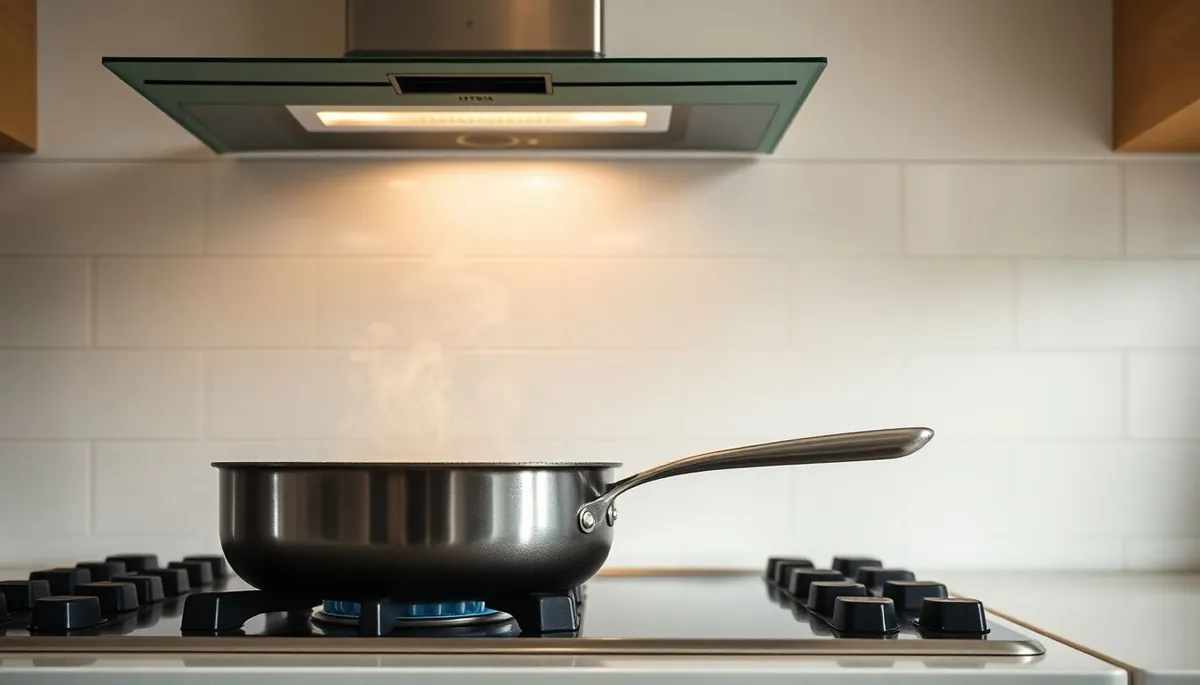
Most people turn the extractor fan on when they notice the smell. That’s already too late.
Turn the fan on before you start cooking. Not after the smell is in the room. This creates an upward airflow. It pulls cooking air into the extraction path as soon as it’s produced.
And here’s the part almost everyone gets wrong: you need to leave the fan running for 10 to 15 minutes after you finish cooking.
Smell particles keep releasing from hot surfaces, pans, and the hob for several minutes after the heat is off. If you switch the fan off right away, you’ve only removed part of what was produced. The rest drifts into the next room while you’re washing up.
Combine this with closing the kitchen door while you cook. When the door is closed and the fan is running, cooking air is drawn upward into the extraction path. Rather than travelling sideways into other rooms.
It’s not complicated. But it works.
How to Reduce What the Fan Has to Deal With
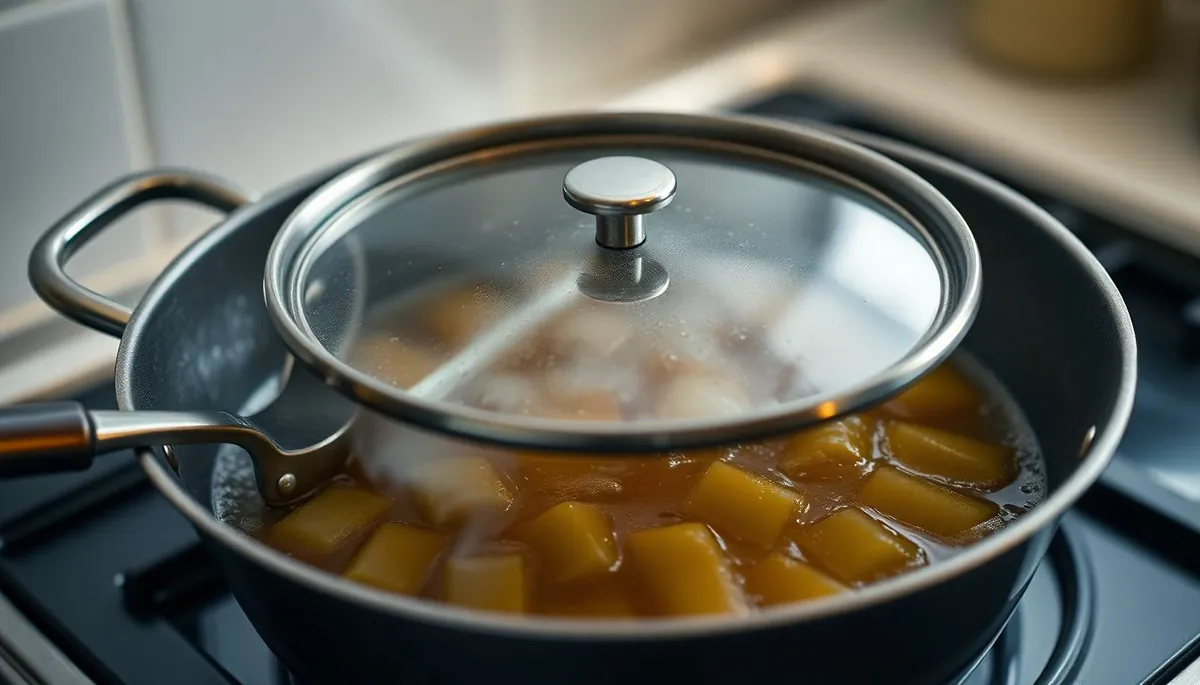
Not all cooking methods produce the same amount of smell. Frying is the worst offender.
High heat releases fatty acids. And those particles cling to fabric and surfaces more than almost anything else. If you’ve ever fried bacon and then smelled it in your curtains two days later, you know exactly what I’m talking about.
Using lids on pans during boiling, simmering, and frying reduces the volume of smell particles that reach the kitchen air in the first place. It’s containment at the source. Before your extractor fan has to deal with it.
Lower-temperature cooking also helps. Roasting at lower heat for longer, or simmering rather than a rapid boil, produces less airborne smell than the high-temperature version.
The combination of lid on the pan, fan on and running, and kitchen door closed reduces what reaches other rooms more than any single change alone.
It’s not about doing one thing perfectly. It’s about doing three things reasonably well at the same time.
When the Smell Has Already Settled Into the Room

If the smell is already in your living room the next morning, opening a window helps. But probably not in the way you think.
The morning-after smell is in the fabric, not the air. Curtains and soft furnishings absorbed smell particles while they were airborne. Now they’re slowly releasing them as the room temperature changes.
Airing with cross-ventilation moves smells out rather than just diluting them. A single open window circulates air within the room. It doesn’t draw it through and out.
You need two windows or doors on opposite sides of the space. This creates a pressure difference that moves the air out rather than around. One window in, one window out. That’s kitchen odor elimination that actually works.
But here’s the uncomfortable truth: if your curtains in a kitchen-adjacent room haven’t been washed in over six months, they’re carrying a base level of cooking smell. Airing helps temporarily but doesn’t remove it.
Washing is the only fix. The smell particles are in the fibers. You can’t ventilate them out.
This is also why odours keep returning after cleaning surfaces but not addressing the textiles that absorbed the smell in the first place.
Here’s what actually works to stop cooking smells from spreading:
- Turn the fan on before you start cooking, and leave it running for 10 to 15 minutes after you finish
- Close the kitchen door while cooking if you have one
- Use lids on pans to contain smell particles at the source
- Clean or replace your extractor grease filter every three to six months
- Create cross-ventilation with two open windows or doors on opposite sides of the space when airing
- Wash curtains and soft furnishings in adjacent rooms regularly, not just when you notice the smell
You don’t need expensive smell absorption methods or complicated food smell ventilation systems. You need to understand how cooking fumes control actually works. And then apply it consistently.
The smell will still happen. You’re cooking food, after all. But it won’t take over the rest of your home and live in your sofa for three days.
And that’s the difference between managing cooking smells and letting them manage you.


