
You vacuum often, and the carpet is clean.
But some areas look darker, flatter, or more worn than others. That’s not random.
Carpet wear patterns show up for clear reasons. When you know them, you can stop early aging, clean better, make your carpet last longer, and know when it needs a deep clean.
This guide shows what causes wear patterns in carpets and what you can do about them.
First, let’s talk about what “wear patterns” really are.
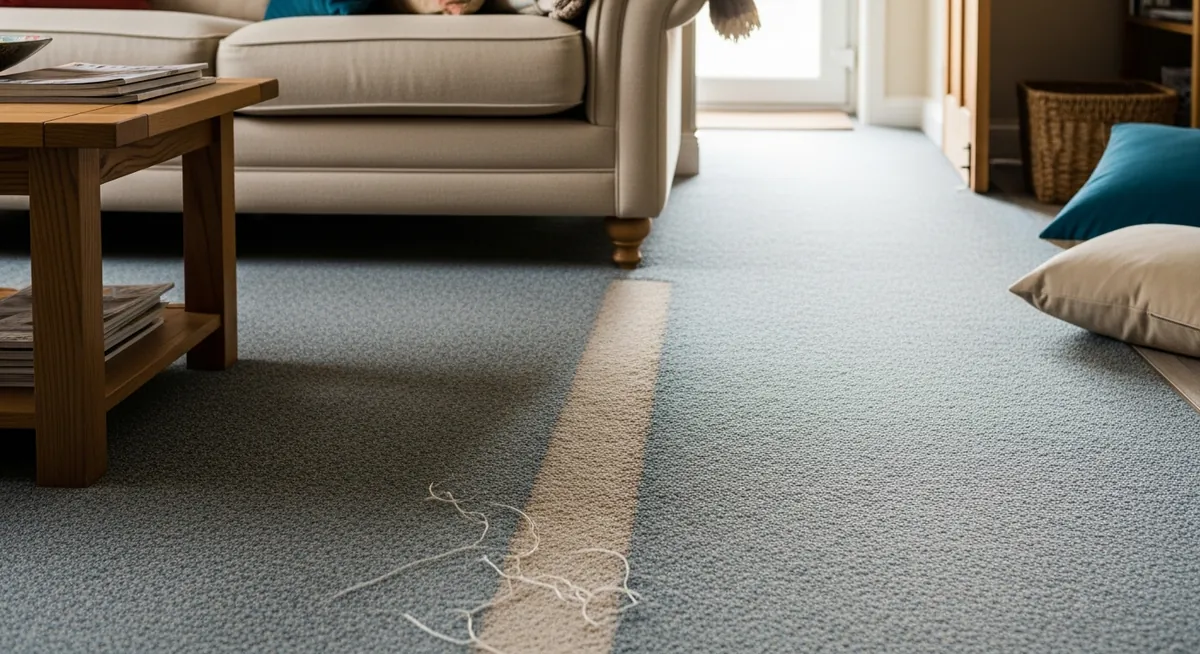
Wear patterns are easy-to-see changes in texture, color, pile height, and how thick the carpet looks.
They show up as flat walkways, dark traffic lanes, shiny or matted spots, and faded areas near windows.
Here’s a key point: Wear doesn’t always mean damage.
Sometimes it’s just flat fibers. Other times it’s dirt buildup or fibers breaking down.
The difference matters when you’re choosing what to do next.
1. Repeated Foot Traffic (The Most Common Cause)
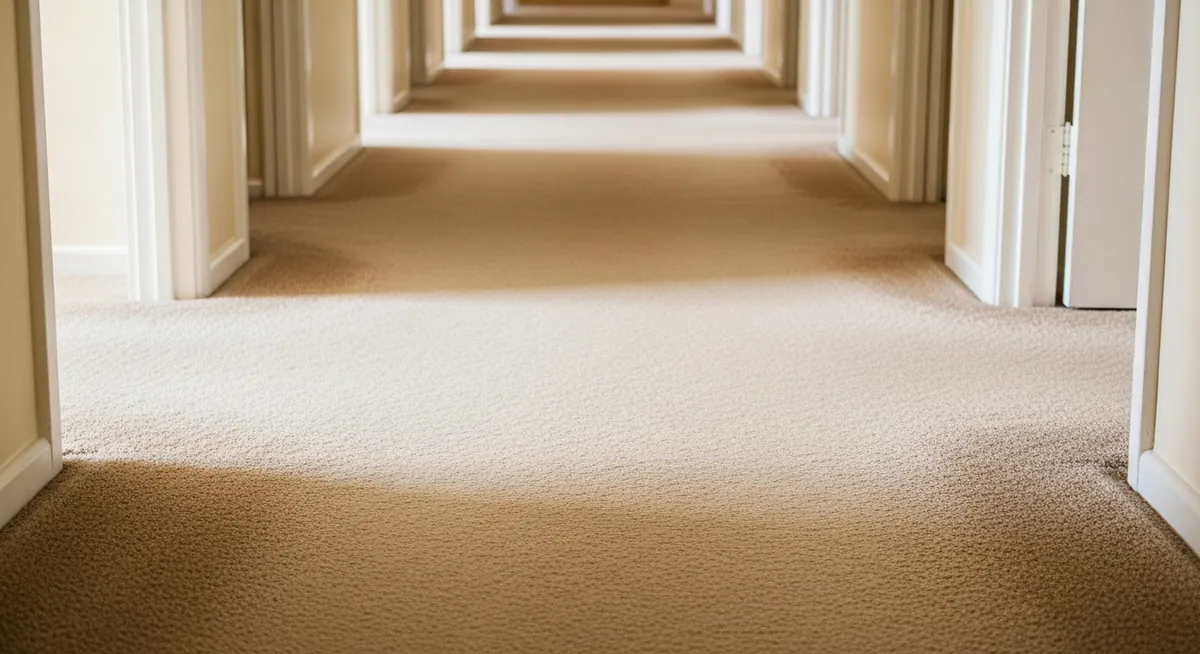
Every home has natural walking paths from the door to the couch, from the bedroom to bathroom, and through hallways.
Over time, these paths become easy to see. Fibers get pressed down. Dirt grinds into the pile. The padding below starts to pack down.
The more you walk the same path, the more you’ll see the pattern.
This is common in hallways, in front of sofas, and near doors.
The carpet isn’t failing, it’s just reacting to pressure and rubbing.
Think of it this way: A carpet in a guest room that nobody uses can look almost new after five years. But a hallway carpet the same age may show clear traffic lanes. It’s the same carpet, just a different use.
That’s normal.
The fibers aren’t broken yet; they’re just pressed down from thousands of footsteps on the same route.
2. Dirt and Soil Grinding Into Fibers
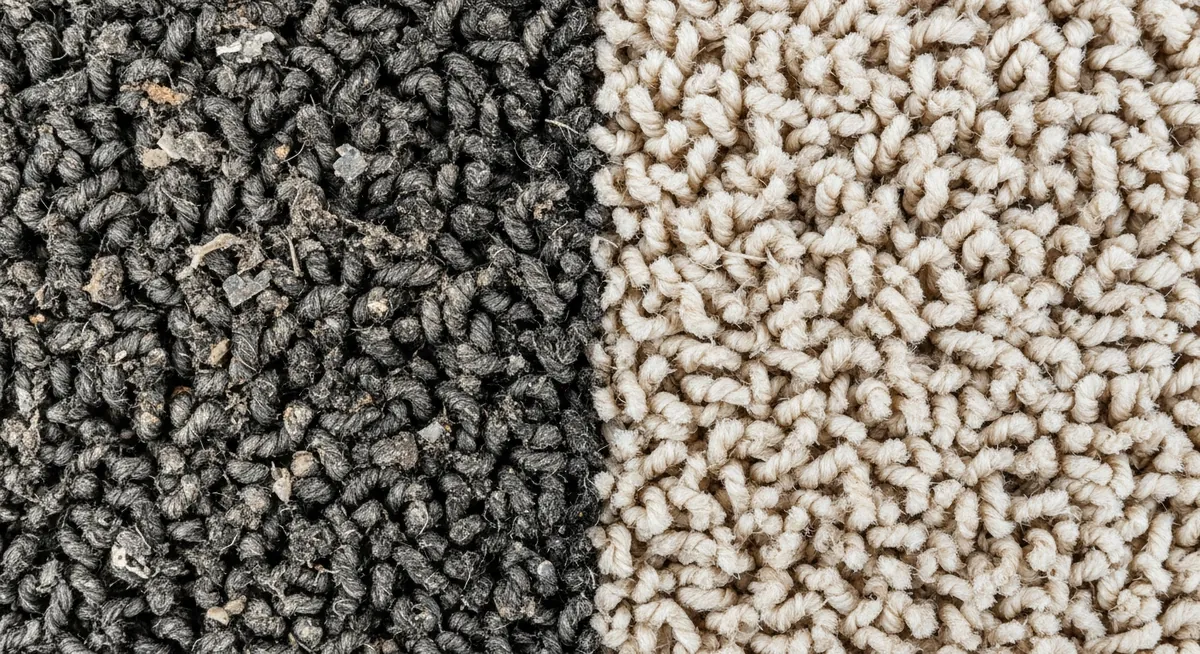
Dirt acts like sandpaper on your carpet.
When soil sits in carpet, it settles deep into the fibers. Foot traffic grinds it even further down. The fibers start to look dull and feel rough.
This creates dark traffic lanes that vacuuming alone might not fully remove.
Over time, dirt stuck deep in the carpet causes fibers to break down rather than just change color.
Sharp dirt bits act like tiny pieces of sandpaper. Each step grinds them against the fibers. The carpet may look darker in those spots, but it’s not just a color change—the fibers are wearing down.
This is why homes in snowy areas or places with lots of outdoor dust see faster wear. More dirt gets tracked in.
If traffic lanes stay there even after you vacuum really well, it may mean dirt has built up deep down. It needs professional deep cleaning to pull out debris from below the surface.
3. Furniture Weight and Indentation
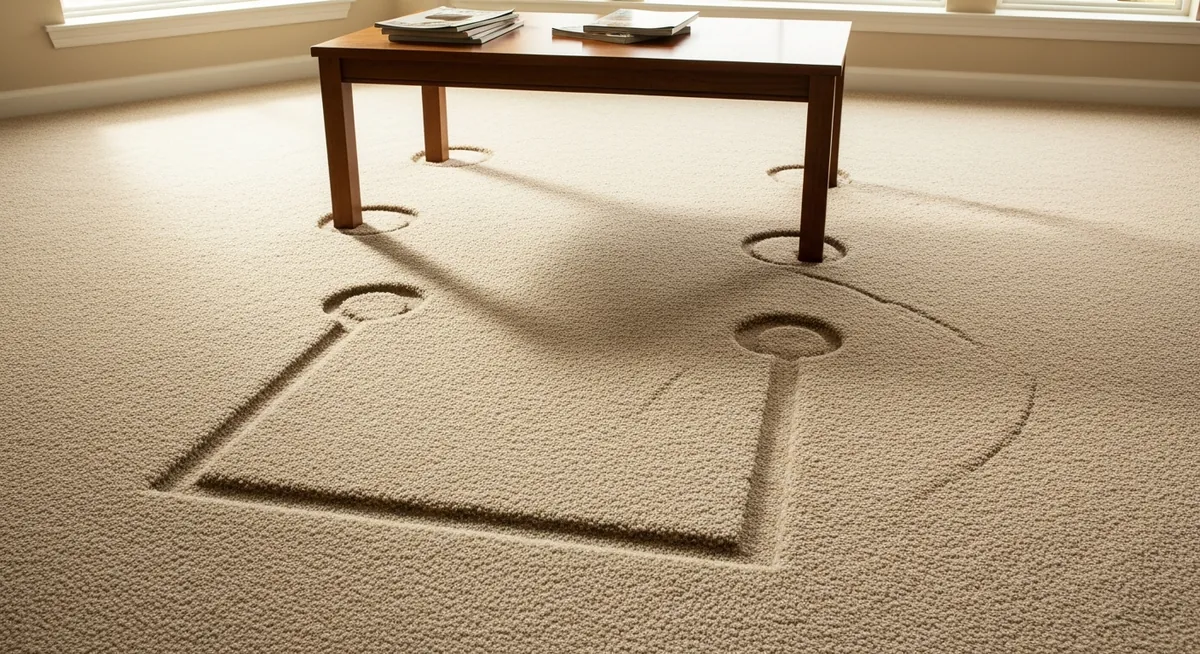
Heavy furniture presses down on carpet fibers over time.
This creates dents, flat pile, and color changes once you move the furniture.
The longer the weight stays in one spot, the more likely the dent becomes lasting.
Some dents can be lifted with ice cubes or steam. But long-term pressure often leaves lasting marks.
This isn’t always something you can avoid. Furniture has to go somewhere.
But moving furniture around once in a while, even just a few inches, can spread out the pressure instead of keeping it all in one spot.
Some carpet types handle this better than others. Dense, low-pile carpets resist dents longer than soft, high-pile ones.
4. Sunlight and Fading
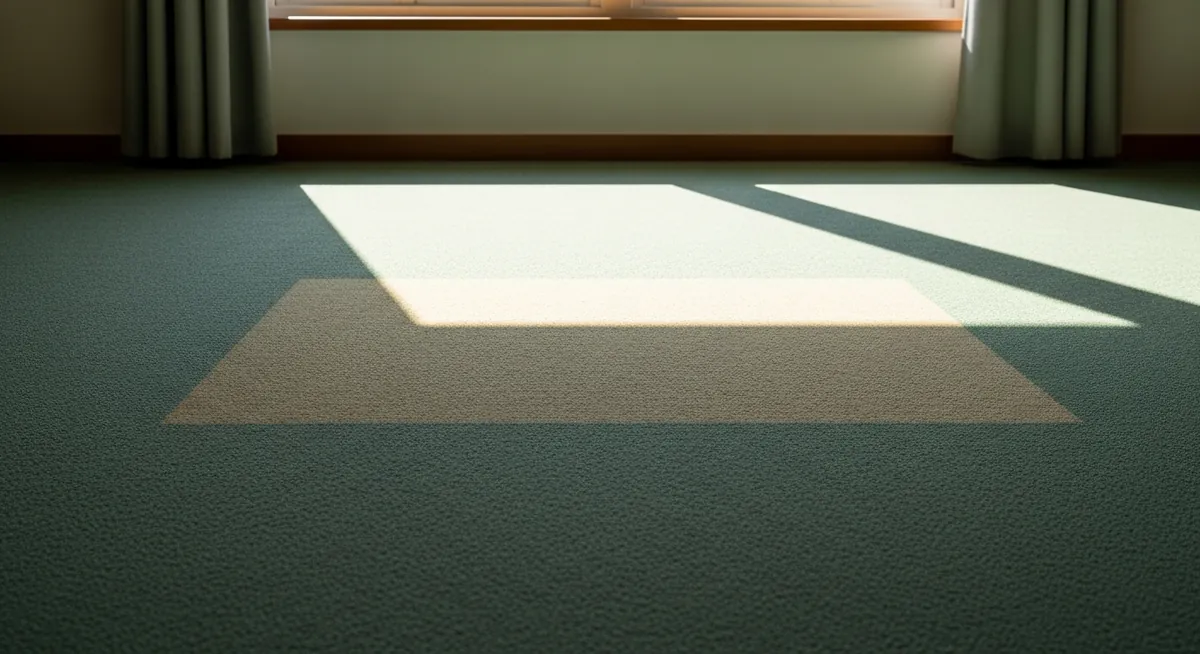
Direct sunlight breaks down carpet dyes over time.
Common signs include light patches near windows, uneven color across the room, and faded outlines where rugs used to cover the area.
This is color loss, not dirt… but it often looks the same.
Homes with large, open windows are prone to this type of wear. South- and west-facing windows cause the most fading.
UV rays slowly bleach the fibers. The carpet isn’t dirty; it’s changed.
This is one reason why moving furniture or rugs sometimes shows color changes. The covered areas stayed safe while the open parts faded.
Once fading happens, it’s lasting. Cleaning won’t bring back the color.
5. Poor Padding or Aging Materials
Carpet padding plays a hidden but key role.
If the padding below presses down unevenly, breaks down, or was low quality from the start, you may notice an uneven surface, visible dips, and more flattening in areas you use a lot.
Sometimes the carpet fibers are fine. But the support layer below is failing.
Older carpets show this more.
Padding absorbs the impact from walking. When it loses its cushioning ability, the carpet fibers take more direct stress. This speeds up wear.
You can’t see the padding without pulling up the carpet. But you can feel it. If some areas feel harder or less cushioned than others, the padding may be packing down unevenly.
This is common in homes where carpet has been down for ten years or more.
How to Slow Down Wear Patterns
Wear patterns are normal in homes where people live. So the goal is slowing them down, not getting rid of them fully.
Here are some easy steps:
- Move furniture around once in a while. Even shifting things a few inches changes the pressure points and stops lasting dents from forming in one spot.
- Put area rugs in high-traffic zones. Hallways and doors benefit the most. A rug is much easier to replace than wall-to-wall carpet.
- Vacuum often, especially in traffic lanes. Several times per week in busy areas removes rough dirt before it grinds deeper into fibers.
- Take off shoes at the door. This cuts down on the amount of dirt and grit tracked onto carpet.
- Clean up spills right away. Moisture weakens fibers and attracts more dirt. Blot spills fast to stop staining and fiber damage.
- Use door mats. Put them both outside and inside entry points. They’ll catch most dirt before it reaches your carpet.
- Control how much sunlight hits the carpet. Curtains, blinds, or UV-blocking window film slow down fading in bright rooms.
None of these steps will stop wear fully. But together they make your carpet last longer and look better.
Conclusion
Carpet wear patterns happen for clear reasons: foot traffic, dirt stuck deep in the fibers, furniture weight, sunlight, and aging materials.
Some changes are just cosmetic. Others show deeper fiber stress.
The key is knowing what you’re looking at.
When you catch wear early, you can often manage it. But when you ignore it, it becomes lasting.
Carpets are made to handle daily life. But they work best when you take steady care of them and get deeper cleaning when needed. Traffic lanes that won’t vacuum away mean dirt is stuck below the surface. Fading near windows shows UV damage. Dents show pressure from weight.
What causes wear patterns in carpets isn’t a mystery—it’s just physics, chemistry, and time.
And once you spot the signs, you know exactly where to focus your effort.


