
You just cleaned. Every surface was wiped down. Every shelf was clear of that fine gray layer. The house looked perfect.
Then two days pass.
The coffee table has a light film already. The TV stand shows streaks. The baseboards look like you never touched them.
Why does dust come back so quickly? It’s one of those household frustrations that makes you wonder if cleaning even matters.
Here’s the thing: it’s not you. Dust builds up all the time in every home. It’s not a sign of poor cleaning or a dirty house. It’s just how indoor spaces work.
The speed at which dust returns depends on a few key factors. Most of them are easy to manage once you know what’s going on.

Before we talk about why it keeps coming back, let’s look at what you’re actually cleaning.
Household dust is not one thing. It’s a mix of particles from inside and outside your home.
The typical dust on your furniture includes:
- Dead skin cells – Humans shed all the time, and those cells settle on surfaces
- Fabric fibers – From clothing, bedding, towels, and furniture
- Pet dander – If you have animals, their hair and skin add a lot to this
- Pollen and outdoor particles – Tracked in on shoes, clothes, and through open windows
- Dust mites and their waste – Tiny organisms that feed on organic material
Every day, your home makes new dust. People move around. Fabric rubs together. Pets shed. Air flows in from outside.
Even if you deep clean today, those sources don’t stop. Dust particles keep being made and moved around. That’s why it looks like it comes back overnight.
Why It Looks Like Dust Comes Back Overnight
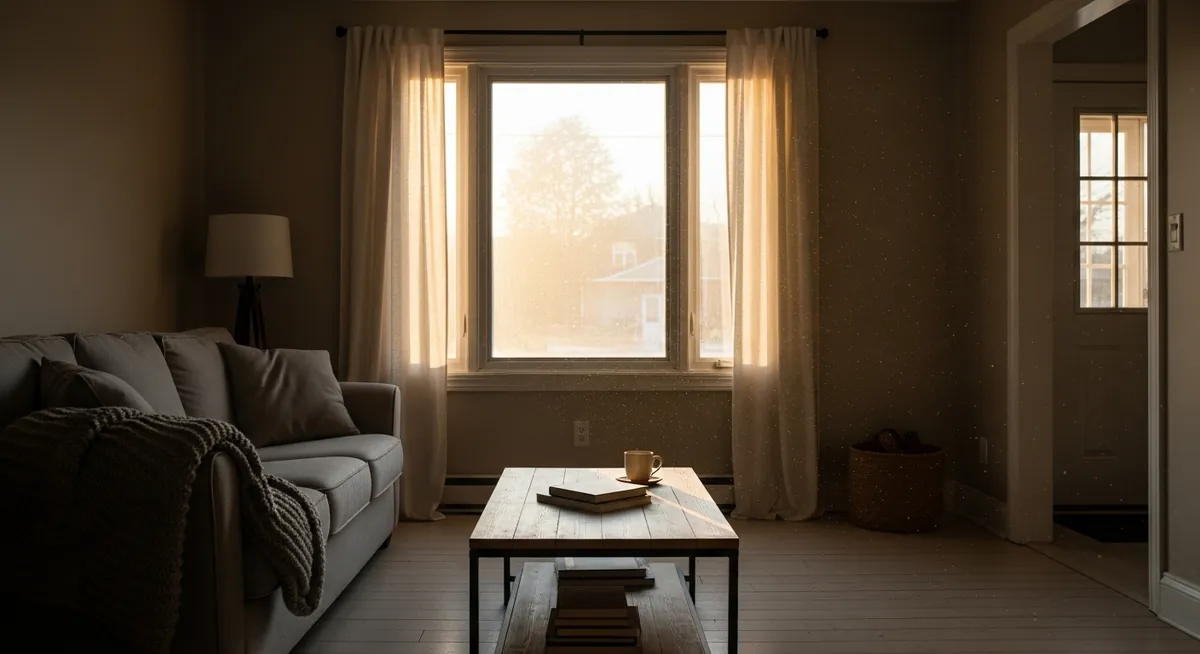
When you clean, you’re removing settled dust. But plenty more is floating in the air, waiting to land.
Here’s what happens after you wipe everything down:
Air flow keeps moving particles around. Your heating and cooling system pulls air through the house. Dust gets picked up, moved around, and lands again. The more your system runs, the more dust moves.
Ceiling fans push particles down. If you run fans often, they’re always stirring up airborne dust. It doesn’t go away. It just lands somewhere new.
Static electricity pulls dust to surfaces. Electronics, certain plastics, and even freshly cleaned glass attract dust particles. That’s why your TV screen seems to collect dust faster than other surfaces.
Cleaning itself stirs up dust. When you vacuum or wipe surfaces, you lift particles into the air. Some land right away. Others float for hours before landing again.
Dust never fully leaves your home. Cleaning removes what has already landed. But the cycle goes on because the sources stay active.
That’s not a failure. It’s just reality.
Household Habits That Make Dust Build Up Faster
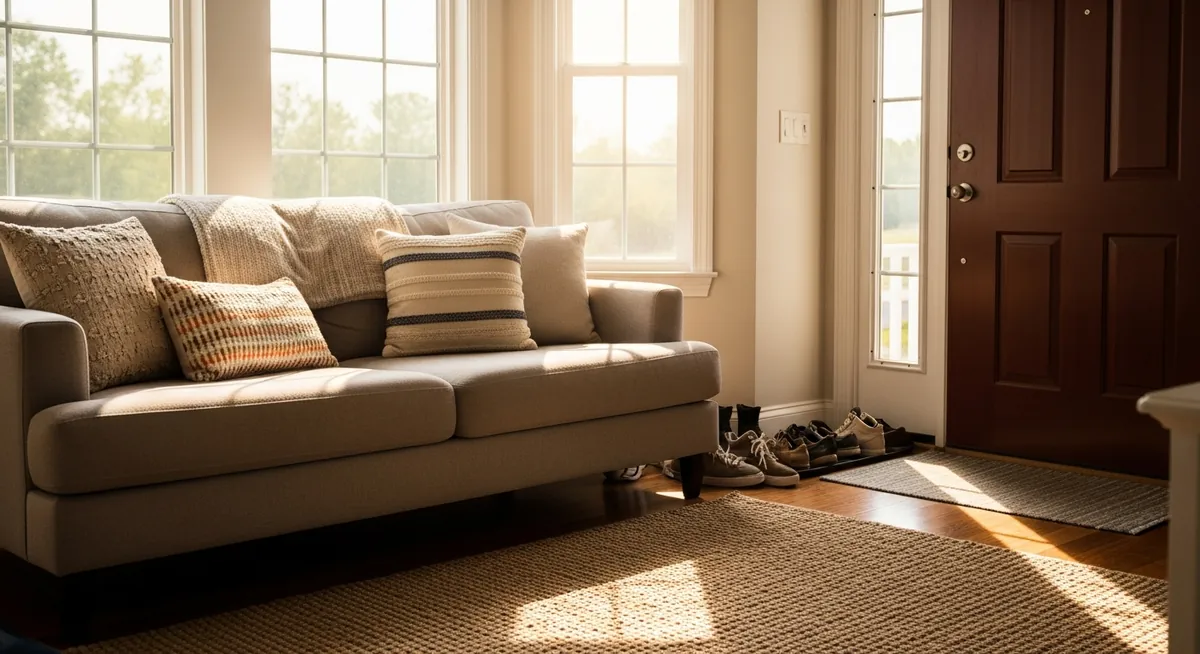
Some homes collect dust faster than others. Location plays a role, but daily habits matter more.
Wearing shoes indoors tracks in dirt, pollen, and outdoor particles. Every step spreads fine debris across floors. That debris later becomes airborne and settles on furniture.
Keeping windows open during high pollen seasons invites outdoor dust inside. Fresh air feels good, but it comes with a cost. Pollen and particles flow in freely.
Lots of fabric furniture means more fibers breaking down. Sofas, throw pillows, curtains, and rugs all add to dust buildup. The more textiles you have, the more material breaks down over time.
Cluttered surfaces trap dust. When shelves and counters are crowded with items, dust settles between objects. It’s harder to clean and builds up faster. Surfaces with fewer items are easier to keep clean and show less visible dust. If you’re noticing dust piling up around too many decorative objects, reducing visual clutter can make a big difference in how quickly surfaces get dusty again.
Rarely changing air filters allows dust to move around again. Dirty filters can’t trap particles well. Instead, they push dust back into your living spaces. If you’re not checking filters monthly, dust will return faster.
Some homes naturally collect more dust because of pets, location near busy roads, or older heating systems. But small habit changes can slow the cycle a lot.
Simple Ways to Keep Dust Under Control Longer
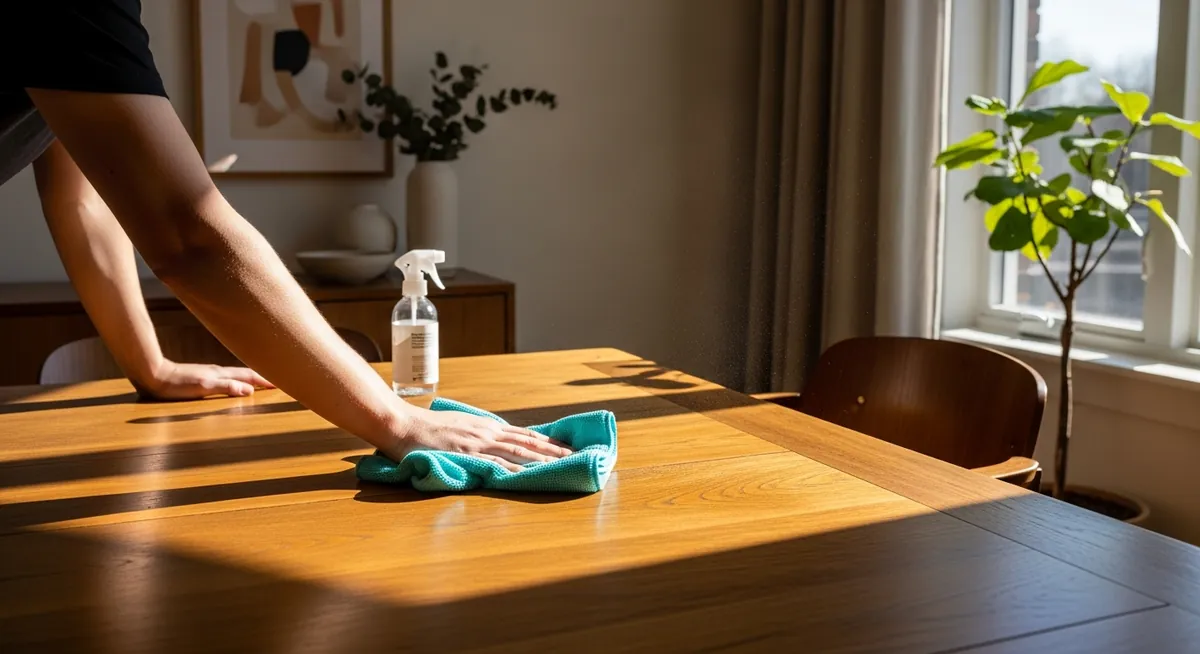
You can’t get rid of dust completely. But you can reduce how often it becomes visible.
Use microfiber cloths instead of dry dusters. Microfiber traps particles instead of spreading them around. Dry dusters and feather dusters just move dust from one surface to another. A damp microfiber cloth picks it up and holds it.
Dust from top to bottom. Start with ceiling fans and high shelves. Work your way down to tables and baseboards. This stops cleaned surfaces from getting dusty again as particles fall.
Vacuum with a HEPA filter if you can. Standard vacuums can blow fine dust back into the air. HEPA filters trap smaller particles and improve indoor air quality. If you don’t have one, emptying your vacuum outside helps reduce dust moving around again.
Change air filters often. Check your heating and cooling filter every month. Replace it when it looks gray or clogged. This single habit makes a bigger difference than most people realize.
Reduce clutter on flat surfaces. The fewer items sitting out, the easier it is to wipe surfaces quickly. Less clutter also means fewer places for dust to settle and hide.
Wash bedding weekly. Sheets, pillowcases, and blankets shed fibers and collect skin cells. Washing them often reduces one of the biggest sources of household dust.
Being consistent matters more than intensity. A quick wipe-down twice a week stops heavy buildup better than one deep clean every two weeks.
If dust has built up in places you don’t clean often—behind furniture, inside vents, along baseboards—occasional deep cleaning helps reset things. It’s not about perfection. It’s about managing the cycle so dust doesn’t take over.
When Dust Might Signal a Bigger Issue
In most homes, dust is just part of life. But sometimes, too much dust points to something worth checking.
If dust seems very heavy or constant, think about whether your home has poor air filtering. Older heating systems or cheap filters let more particles move around. Upgrading your filter or adding an air purifier can help.
Leaky ductwork also spreads dust. If your ducts have gaps or aren’t sealed right, they pull in dust from attics, crawl spaces, or walls. That dust then blows into your living areas every time the system runs.
Recent renovations leave behind fine particles that take weeks to fully clear. Drywall dust, sawdust, and building debris settle slowly. If you’ve had work done recently, expect dust to linger longer than usual.
Old insulation can break down and release fibers into your air. If you notice dust going up suddenly without any lifestyle changes, insulation might be the cause.
Too much humidity creates conditions where dust mites thrive. More mites mean more waste, which adds to visible dust. If your home feels damp or you see water drops on windows, humidity control might reduce dust over time.
These issues are less common than everyday dust sources. But if regular cleaning isn’t making a dent, it’s worth looking into whether something structural is adding to the problem.
Conclusion
Dust comes back quickly because your home is a living space. People move. Fabrics shed. Air moves around. Particles settle.
The goal isn’t to get rid of dust completely. That’s not realistic. The goal is to manage it so it doesn’t become too much or constant.
Small changes make a difference. Using the right tools, cleaning top to bottom, changing filters often, and reducing surface clutter all slow down dust buildup. Being consistent beats intensity every time.
When your home feels lighter and surfaces stay cleaner a bit longer, you’ll notice. And oddly enough, the rest of your cleaning routine gets easier too.
Dust will always return. But now you know why—and what actually helps.


