
A small bathroom can feel messy fast. You set down one bottle of lotion, then a hair tie, then a makeup palette. By the end of the week, your counter looks like a beauty store exploded.
Here’s the thing: small bathrooms aren’t messy by nature. They just don’t forgive mess the way larger spaces do. When every surface matters, clutter shows up right away.
The good news? You don’t need a total makeover or pricey storage systems to fix this. You just need a few smart changes that match how you really use the space. This guide walks through easy ways to keep a small bathroom tidy without turning it into a Pinterest project that only looks good in photos.
Before you buy another basket or shelf, let’s start with what really matters: finding out what should be in there.
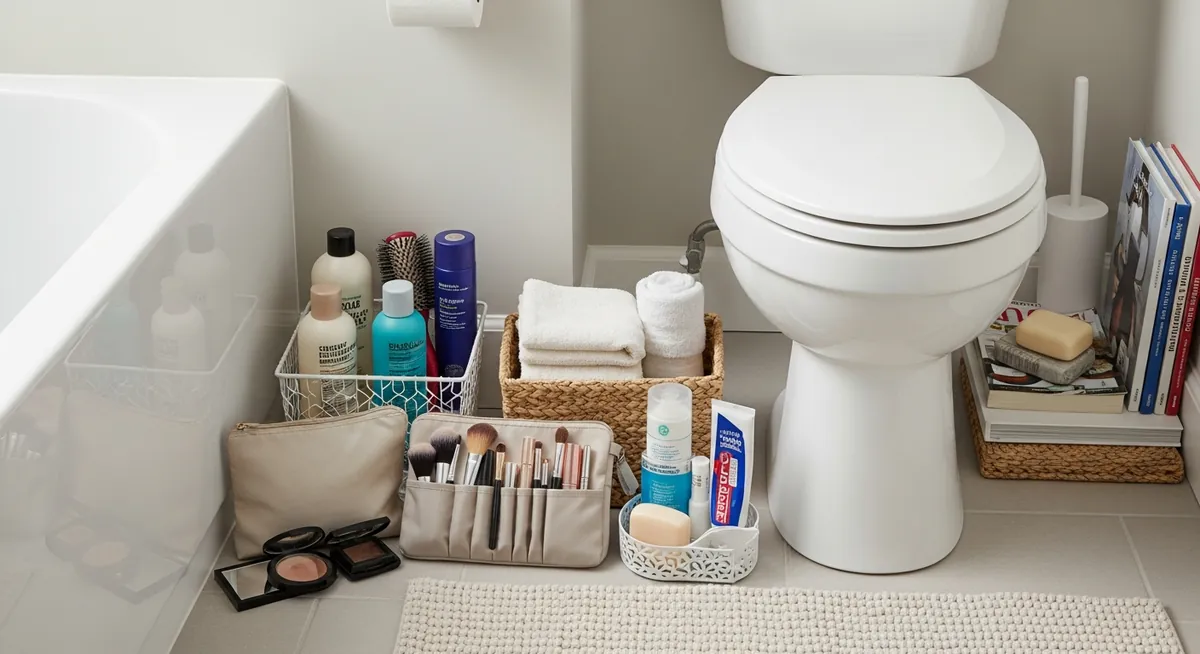
Most small bathrooms feel messy because they’re holding too much stuff. Not everything needs to live there.
Start by picturing the space empty. Imagine pulling everything out of the drawers, cabinets, and counters. Now group those items by type. Daily must-haves like your toothbrush, face wash, and deodorant go in one pile. Backup supplies—extra shampoo bottles, unopened razors, cotton balls—go in another. Rarely used items like travel-size bottles or seasonal products get their own group.
Look at those piles honestly. Do you really need three half-empty bottles of body lotion in the bathroom? Could the backup toilet paper live in a hallway closet instead? What about those hair products you haven’t touched in months?
When you crowd the space, staying tidy becomes harder. When too many items fight for the same shelf or drawer, even a good system fails. Everything feels crammed. Cleaning takes twice as long because you’re always moving things around.
The goal isn’t to toss everything. It’s to make sure what stays earns its place. Daily items deserve the best spots. Backups can live elsewhere. Rarely used products might belong in a different room.
When you edit first, the space feels lighter. And when the bathroom feels lighter, staying tidy becomes much easier.
Now that you know what stays, let’s talk about where it goes.
Make Under-the-Sink Storage Work Better
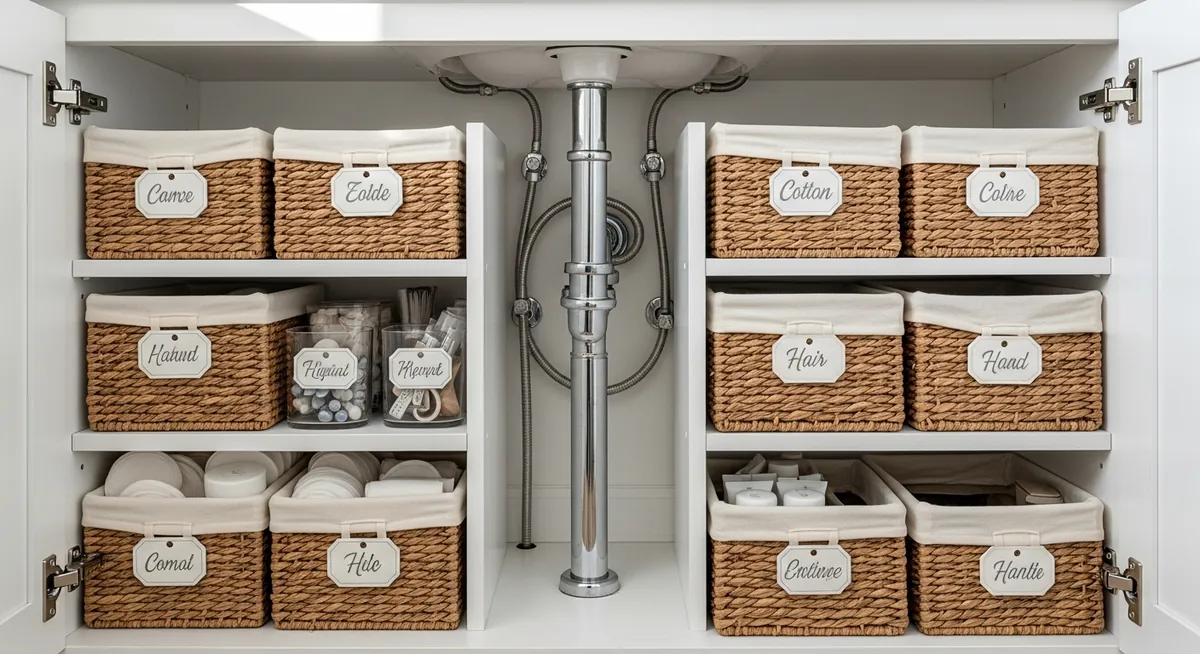
The under-sink cabinet is usually the messiest area in any bathroom. Open, empty space becomes chaos fast.
Here’s why: without structure, items get shoved wherever they fit. Cleaning spray tips over. Small bottles hide behind bigger ones. You end up digging through everything just to find one thing.
Split the area into zones. Use bins or baskets to separate types. Put cleaning supplies in one bin, hair care in another, and skincare grouped together. This stops the free-for-all effect where everything mixes.
Keep daily items at the front. If you reach for something every day, it shouldn’t need you to move three other things first. Backup supplies and rarely used products can go toward the back.
Stackable bins help when you’re short on space. Just make sure you’re not creating a system where you have to unstack everything to get what you need. That defeats the purpose.
The real test of good under-sink storage: Can you grab what you need in five seconds or less? If the answer is no, the system needs fixing.
This isn’t about making the cabinet look perfect. It’s about making it work with your real habits. When the most-used space in your bathroom runs smoothly, the rest follows.
Speaking of smooth running, let’s talk about the most visible part of the bathroom.
Clear the Counter and Keep It That Way
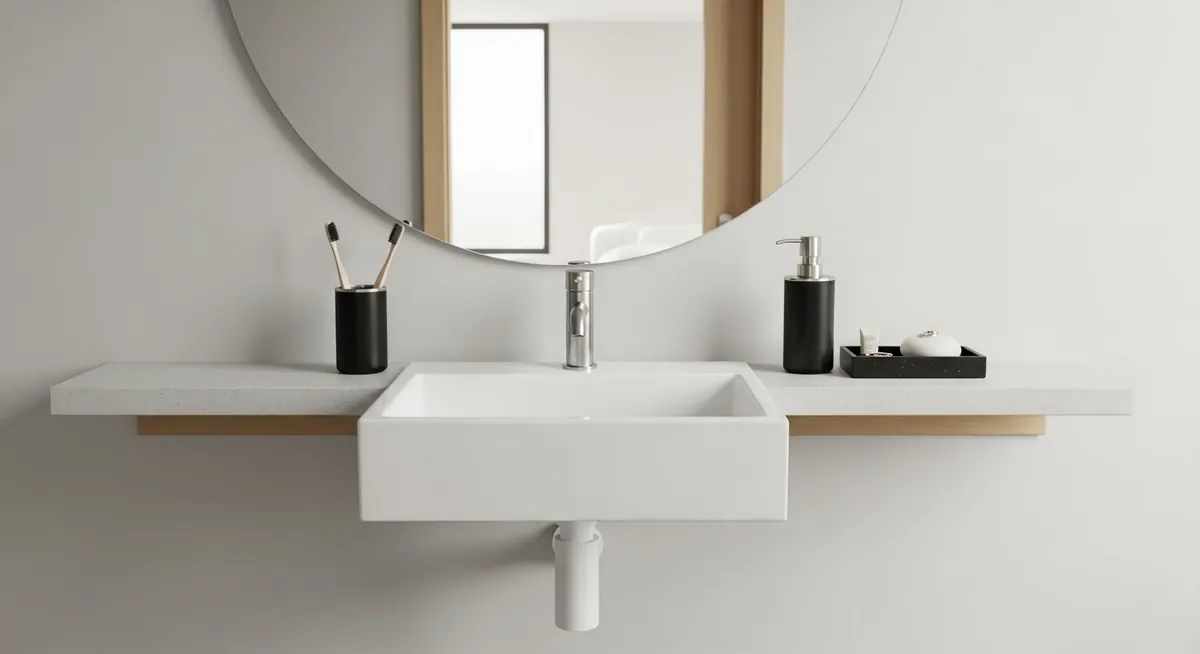
The counter sets the tone for how calm or messy the bathroom feels at first glance.
In small bathrooms, visible surfaces make clutter worse. Three items on a large counter look fine. But three items on a small counter start to feel crowded. Add five more, and the space feels packed.
Limit the counter to true daily must-haves. A soap dispenser, toothbrush holder, and maybe a small tray for rings or a watch. That’s it.
Everything else—makeup, hair products, skincare—should have a home inside a drawer or cabinet. If you use something daily but it doesn’t need to sit out, find it a spot that’s just as easy to reach.
Fewer items mean faster cleaning. You’re not always wiping around bottles or moving things to scrub the surface. The bathroom stays cleaner longer because there’s less chance for buildup.
Here’s the other benefit: visual calm. When too many items fight for attention, the space feels busy even when it’s clean. A clear counter creates breathing room and makes the bathroom feel bigger than it is.
The counter sets the tone for your whole bathroom. When it’s under control, the rest of the space follows.
Now let’s look at where most small bathrooms have hidden potential: the walls.
Use Vertical Space Without Crowding It
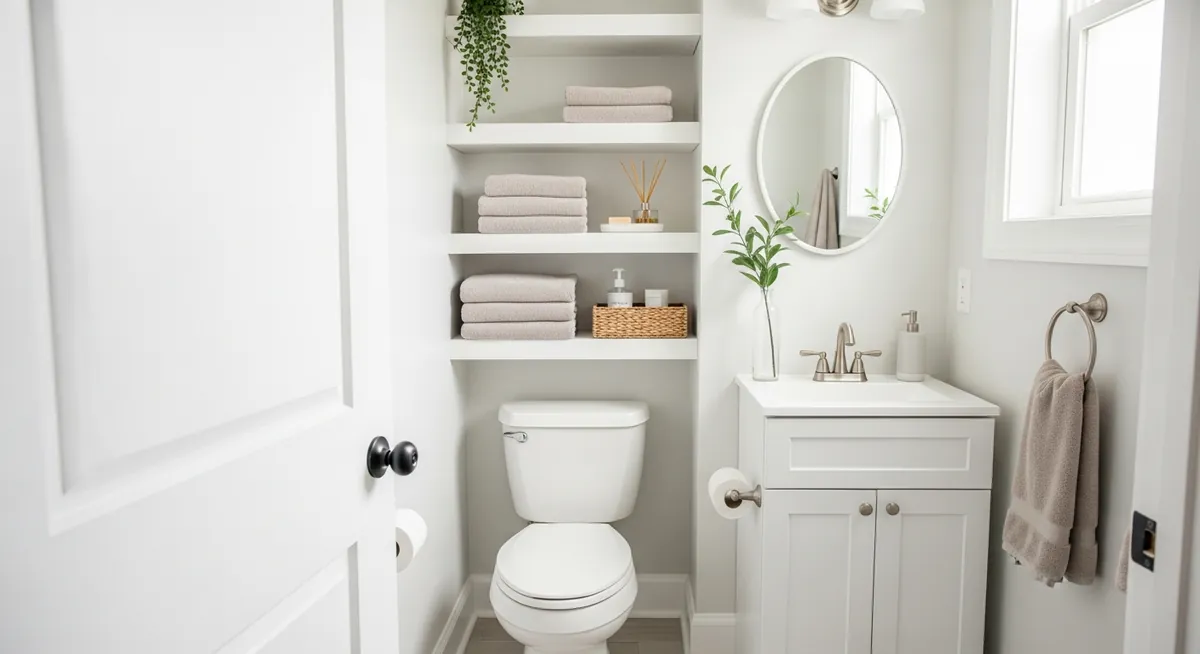
Small bathrooms do better when you plan upward rather than adding wider furniture that takes up floor space.
When floor space is tight, vertical storage becomes your best tool. Floating shelves above the toilet, hooks behind the door, or a slim cabinet mounted on the wall—these options free up counters and floors while keeping things easy to reach.
But here’s where less is more. Too many shelves create visual noise. Every surface becomes another place to manage. The bathroom starts feeling cluttered even when it’s tidy.
Pick vertical storage carefully. One or two smart shelves work better than five crammed ones. Use matching bins or baskets to create unity. Open shelving looks clean when items are grouped on purpose. But it looks messy when random bottles and products sit exposed.
Hooks are underrated and super useful. A few mounted hooks behind the door give towels and robes a home without taking up floor space. Just avoid piling them up. Two towels per hook max, or they start to look messy.
The goal is to add function without adding visual weight. If you’re working to keep a sense of calm, think about how different storage choices affect the overall feel.
Vertical space expands what a small bathroom can hold. Just make sure you’re not trading physical clutter for visual clutter.
Once the structure is in place, the next step is keeping it working for you.
Design the Bathroom So Resetting It Takes Minutes
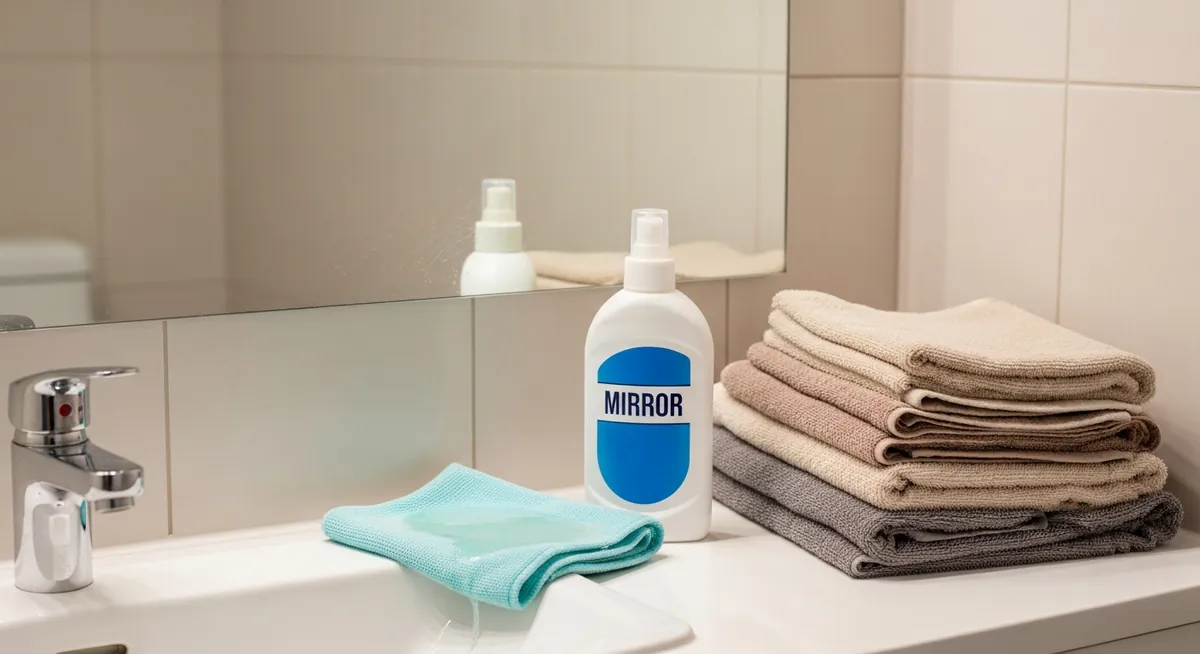
Organization fails when upkeep feels hard or takes too much time.
Small bathrooms need simple reset habits. A two-minute wipe down after your morning routine. Folding towels right away instead of leaving them draped over the shower rod. A quick check inside drawers once a week to catch items that moved from their spots.
These small actions stop buildup. When you tackle clutter daily, it never piles into a bigger problem. The bathroom stays useful without needing a full cleanup every month.
Sometimes mess pairs with grime in forgotten areas. Grout lines that haven’t been scrubbed in months. Cabinet insides that need a good cleaning. Or soap scum buildup that makes the space feel dingy even when it’s tidy.
If your bathroom needs a full refresh before you can start a new system, a deep cleaning service can reset the space. Starting with a truly clean slate makes keeping things tidy easier.
The key is building the system around your real routine. If you’re not someone who folds towels right away, don’t create a system that needs it. If you use certain products daily, they should be easy to reach without extra steps.
When resetting the bathroom takes minutes instead of an hour, you’ll do it. And when you do it, the space stays tidy on its own.
But even the best system needs occasional care to keep working.
Revisit and Edit Every Few Months
Small bathrooms don’t handle buildup well, so regular check-ins help.
Every few months, pull everything out of the drawers and cabinets. Look at what’s really there. You’ll probably find doubles you forgot about, products that expired six months ago, and items you thought you’d use but never did.
Seasonal editing keeps the system working. It stops the slow creep of clutter that happens when you’re not paying attention. One extra bottle turns into three. Three turns into a drawer you can barely close.
Ask yourself: Am I still using this? Does it still belong here? Could it live somewhere else?
Sometimes you’ll see your needs have changed. Maybe you switched skincare routines and half the products under the sink are old. Maybe you bought backup supplies and forgot they were there, so you bought more.
This isn’t about being perfect or having a spotless space. It’s about keeping things clear. When you know exactly what’s in the bathroom and where it lives, daily tidying becomes automatic.
The editing process also builds good habits. It reminds you to think before adding new items. To finish products before opening backups. And to question whether something truly needs space in a small bathroom.
Simplicity is what keeps a small bathroom tidy long-term. Not more bins or more shelves—just clarity about what belongs and where it goes.
Conclusion
Keeping a small bathroom tidy isn’t about buying more storage. It’s about clarity, structure, and working with your daily routine instead of against it.
Start by editing what’s in the space. Make under-sink storage work better. Keep the counter clear. Use vertical space wisely. Build reset habits that take minutes, not hours. And revisit the system every few months to catch clutter before it piles up.
A small bathroom can feel peaceful and useful when every item has a clear purpose and a set place. When that’s in place, how to keep a small bathroom organized stops being a constant battle. It becomes something that happens on its own.
Your bathroom doesn’t need to look like a magazine spread. It just needs to work for you. And when it works, the space feels lighter. Cleaning takes half the effort. And you stop losing bobby pins in the abyss under the sink.
That’s the real goal.


