
You spend Sunday afternoon dusting every surface in your living room. By Wednesday, the TV stand has a visible film. The coffee table looks gray. The shelves feel gritty when you run your finger across them.
It’s not your imagination. Living rooms collect dust faster than almost any other room in the house.
That’s because they’re high-traffic spaces. They’re filled with soft furniture, electronics, and open surfaces. Every person who walks through brings in particles. Every cushion releases fibers. Every vent pushes air that carries dust with it.
The good news? Once you understand why it happens, you can slow it down a lot.
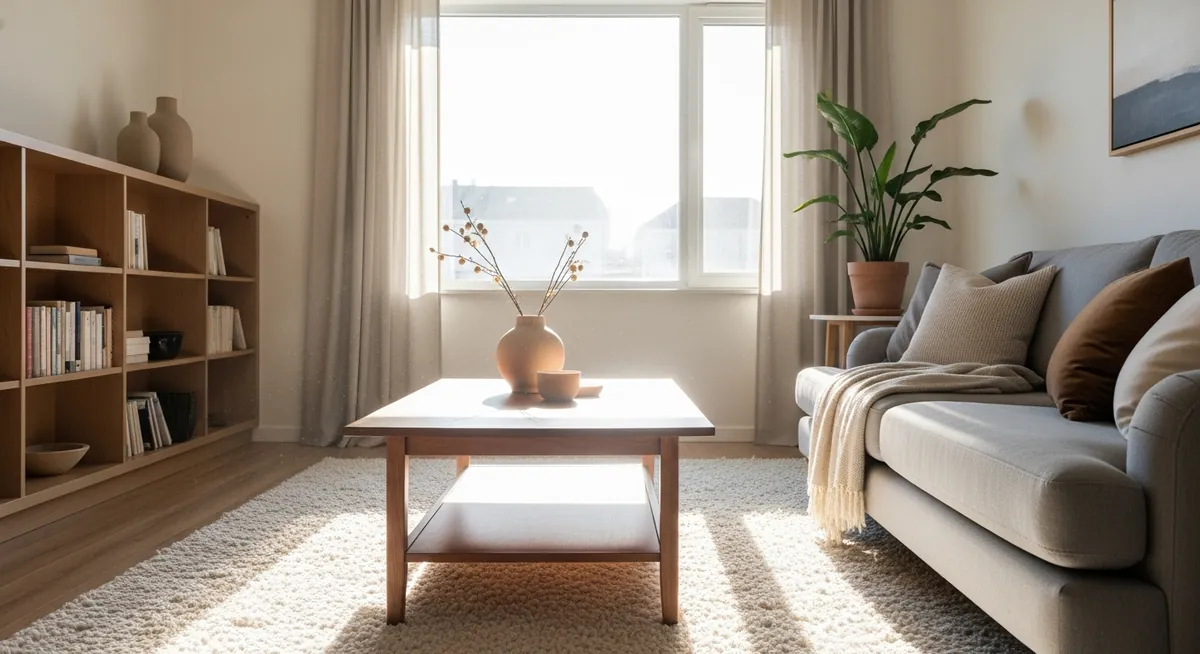
Living rooms are dust magnets by design. They’re built for comfort. That means lots of fabric, surfaces, and airflow.
Here’s what adds to the problem:
- Sofas and chairs shed tiny fibers. These float into the air and settle on nearby surfaces.
- Throw pillows and blankets release lint every time someone sits down or shifts.
- Electronics like TVs and game consoles create static. This pulls dust particles toward them.
- Foot traffic brings in outdoor dirt, pollen, and debris. These break down into finer particles indoors.
- Air vents and ceiling fans move air around the room. They spread dust as they run.
The more fabric and electronics you have, the faster dust builds up. It’s not a cleaning failure. It’s just how these spaces work.
But certain habits make it worse without you knowing it.
Everyday Habits That Make Dust Build Up Faster
Most people aren’t creating dust on purpose. They’re just skipping steps that stop it from piling up.
Skipping weekly vacuuming lets dust settle into carpet fibers and furniture. Then it becomes harder to remove later.
Using dry feather dusters moves dust from one surface to another. It doesn’t trap it. The particles just land somewhere else in the room.
Leaving windows open during pollen season invites outdoor allergens and dust inside. This is especially true in spring and fall.
Letting clutter build up on shelves and tables gives dust more places to land. Every item is another surface that needs cleaning.
When flat surfaces are crowded with picture frames, candles, and stacks of books, dust finds dozens of places to hide. The more items you display, the more time you’ll spend wiping them down.
If visual clutter feels too much, it’s worth learning how it affects more than just dust.
Now that you know what’s working against you, you can change your approach.
Smart Cleaning Tips That Keep Dust Away Longer

You don’t need to deep clean every day. You just need to clean smarter.
Dust from top to bottom. Start with ceiling fans and shelves. Then work your way down to tables and baseboards. Gravity pulls dust downward. Cleaning in reverse order means doing the work twice.
Use microfiber cloths instead of dry dusters. Microfiber traps dust rather than pushing it around. Dampen the cloth slightly for even better results.
Vacuum furniture, not just floors. Your sofa cushions, chair arms, and throw pillows hold a lot of dust. A quick pass with the upholstery tool once a week makes a real difference.
Clean vents and ceiling fans often. Dust collects on fan blades and air vents. Then it gets blown back into the room every time they run. Wipe them down every two weeks.
Wipe electronics gently to reduce static buildup. Use a microfiber cloth or an anti-static wipe on TV screens, remotes, and gaming consoles. Static attracts dust. Reducing it helps keep surfaces cleaner longer.
Being steady matters more than being intense. A quick 10-minute routine once a week stops the heavy buildup that needs an hour of scrubbing later.
For high-traffic living rooms with stubborn dust in vents, baseboards, or behind heavy furniture, professional house cleaning services can help reset the space. This makes weekly care easier.
Reduce the Sources of Dust in the First Place

Cleaning removes dust. Prevention stops it from forming as quickly.
Limit too much decor on open shelves. Every item on display is another surface that collects dust. Keep a few meaningful pieces. Store the rest in closed cabinets.
Wash throw blankets often. Soft fabrics shed fibers all the time. Washing them every two weeks reduces the amount of lint floating around the room.
Replace HVAC filters on schedule. Dirty filters can’t trap dust well. So particles move back into your living space. Check filters monthly. Replace them every three months. Or every two months if you have pets.
Remove shoes at the door. Outdoor dirt breaks down into fine dust once it’s tracked inside. A simple no-shoes policy cuts down on what enters the house in the first place.
Choose storage that closes rather than stays open. Closed cabinets and drawers protect items from dust. They also reduce the number of surfaces you need to clean.
Less stuff means fewer places for dust to settle. That’s not about being a minimalist. It’s about making your cleaning routine easy to manage.
If dust has built up in vents, under heavy furniture, or along baseboards over time, a deep cleaning service can clear out the built-up layers. This gives you a fresh starting point.
A Simple Weekly Dust Control Routine for Living Rooms
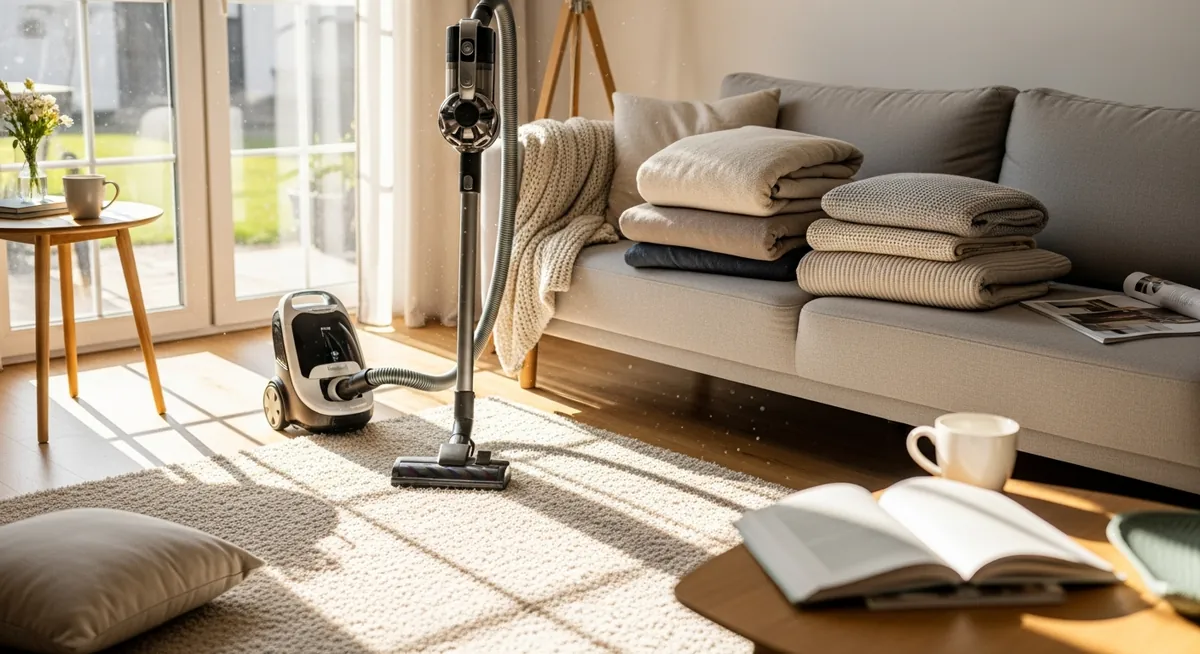
A realistic routine doesn’t need daily effort. It just needs you to be steady.
- Monday: Quick surface wipe. Hit the coffee table, TV stand, and any visible shelves with a microfiber cloth. Takes five minutes.
- Midweek: Vacuum high-traffic areas. Focus on the rug, sofa cushions, and the floor around seating areas.
- Weekend: Full top-to-bottom reset. Dust ceiling fans. Wipe down electronics. Vacuum furniture and clean baseboards.
This pattern keeps dust from becoming visible between cleanings. You’re not chasing perfection. You’re just staying ahead of buildup.
Small, steady actions stop the frustration of seeing dust reappear two days after a deep clean. When your routine matches how quickly dust builds up, the living room stays cleaner with less effort.
Conclusion
Keeping a living room dust-free isn’t about getting a spotless showroom. It’s about managing the sources and staying steady with care.
When you reduce clutter, vacuum often, and use the right tools, dust doesn’t have as many places to settle. The room feels lighter. Cleaning takes half the time. And you’re not always wiping down the same surfaces every few days.
A cleaner-looking living room is easier to maintain when dust is managed ahead of time instead of after the fact. That shift makes all the difference.


