
You tidy up. The living room looks good for about twelve minutes. Then the LEGO bin tips over. A stuffed animal ends up in the hallway. And just like that, the house feels messy again.
Here’s the thing: You don’t need more bins. Most toy storage systems are made for photos, not for real family life.
This guide shares toy storage ideas that actually work because they:
- Are easy for kids to use
- Cut down on visual mess
- Make cleanup faster
- Grow with your child
Before you add new storage, you need to know why current systems fail. Most fail because they ask too much of kids. They need fine motor skills toddlers don’t have yet. They need thinking skills that develop slowly. They look great on Pinterest but fall apart with real use.
The ideas below work because they meet families where they are.
Why This Works
Kids will not use storage they can’t reach easily.
If bins are:
- Too high
- Too heavy
- Hard to open
They use the floor instead.
That’s not defiance. That’s just physics.
How to Do It
Use cube shelves at child height.
Pick soft fabric or light plastic bins. Heavy wooden boxes might look nicer, but a three-year-old can’t lift them.
Keep what’s inside easy to see or clearly labeled. When kids can see what’s inside, they’re more likely to put things back right.
If you have toddlers, put just one toy type in each bin. Building blocks in one. Stuffed animals in another. Simple.
If you have older kids, you can mix types but label clearly. “Arts and Crafts” works. “Random Stuff” does not.
Rotate toys monthly to stop overflow. This keeps the system from breaking down.
2. Create a “One Zone Per Category” Rule
The Mistake Most Parents Make
Toys end up stored all over:
- Books in the bedroom
- Blocks in the living room
- Art supplies in the kitchen
That scatter pattern creates constant mess. Not because your child is messy. Because the system has no logic.
The System That Works
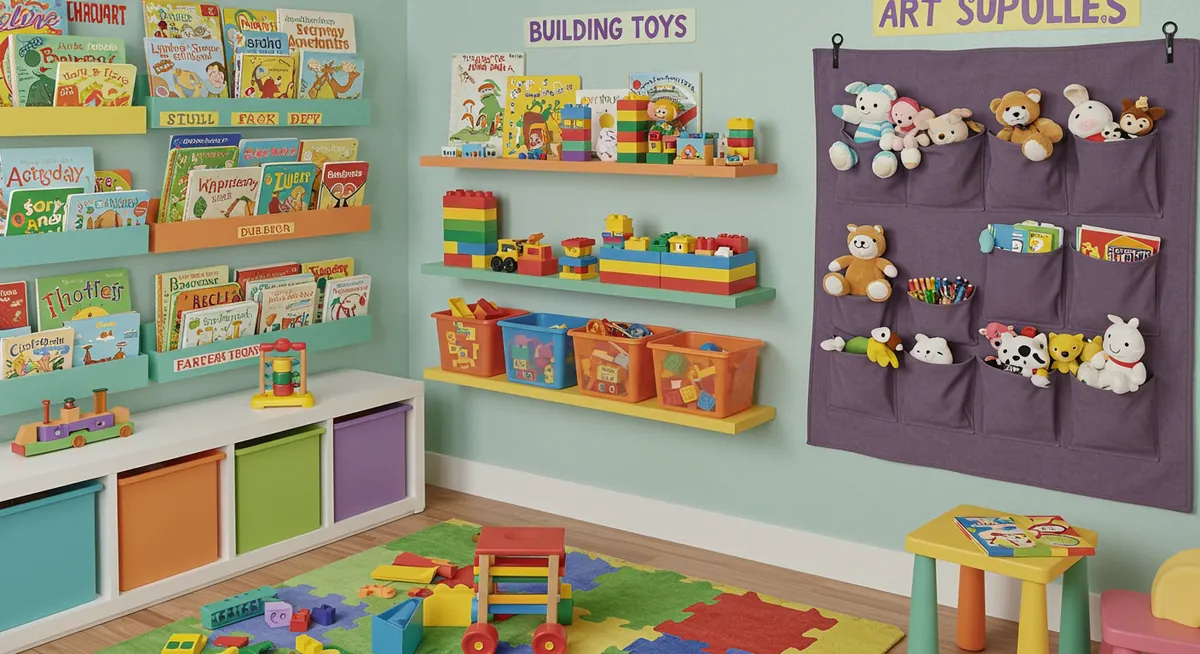
Give each toy type one home:
- One bin for building toys (LEGO, DUPLO, MAGNA-TILES)
- One basket for stuffed animals
- One shelf for books
- One cart for crafts
Kids clean up faster when types stay together. They stop asking where things go. They stop putting toys in random spots.
Why It Cuts Stress
When each thing has a clear home, you stop making daily choices about where things go.
Your brain gets tired from small choices. Getting rid of those choices creates mental space.
If toy sprawl has made floors and baseboards hard to maintain, an occasional deep cleaning service can help reset busy family areas after you declutter.
3. Hide Visual Clutter With Closed Storage in Shared Spaces
Why This Matters for Parents
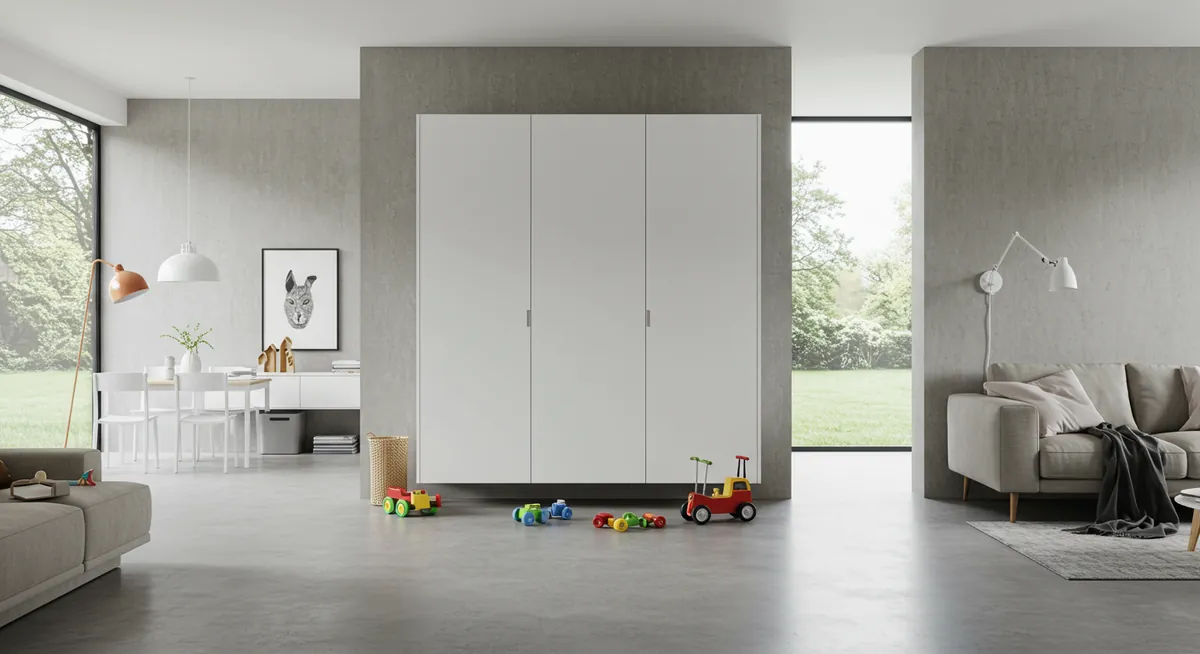
In family rooms, toys are often visible all day. Even if they are organized, visual noise makes the home feel messy.
You deserve spaces that feel calm.
Real Solutions
Storage ottomans hide toys while giving you extra seating. Look for ones with lids that come off for easy access.
Sideboards with doors work great in living rooms. They look like adult furniture. They work as toy storage.
Benches with lift-up lids do double duty in entryways or playrooms.
Closed storage:
- Hides mixed colors
- Cuts down on visual overload
- Makes cleanup faster before guests come
If your child plays in the living room daily, pick furniture that blends storage into the room instead of fighting it. This isn’t about hiding childhood. It’s about creating balance.
4. Use Vertical Wall Space for Small Toys
Walls are underused in most homes.
Floor space fills up fast. Vertical space feels lighter and keeps walking areas clear.
Ideas That Actually Work
Wall-mounted book rails show favorite books face-out. Kids pick books more often when covers are visible.
Pegboards for dress-up items keep costumes neat without taking up closet space. Add hooks at child height.
Hanging baskets for stuffed animals create a “stuffed animal zoo” effect. Some hold 100+ animals. One user said this brought “sanity back.”
Floating shelves for display items show off special toys without making them part of daily play.
Safety Tip
Mount all wall storage properly. Use anchors rated for the weight you’re hanging. Check stability monthly.
5. Rotate Toys Instead of Storing Everything at Once
Many parents think more access equals happier kids.
Often the opposite happens.
Why Rotation Works
Cuts down overwhelm. Twenty toy options create choice overload. Five create real play.
Makes old toys feel new. A toy that goes away for a month becomes fun again.
Cuts daily mess. Fewer toys out means faster cleanup.
Simple System
Keep one large bin of backup toys in closet storage. Clear plastic bins work well because you can see what’s inside without opening them.
Swap every 4–6 weeks. Mark your calendar. Make it routine.
Remove broken or unused toys often. If your child hasn’t touched something in three months, donate it.
This stops toy storage solutions from breaking down under too much volume. The best system in the world fails when overloaded.
6. Make Clean-Up Simple Enough for Kids to Do Alone
Skip Complex Sorting
If a storage solution needs:
- Perfect folding
- Detailed arranging
- Multi-step setup
It will fail.
Not because your child is lazy. Because the system asks too much.
What Works Instead
Large baskets for quick toss-in cleanup. The Humble Crew toy storage organizer uses tilting plastic bins in different sizes. Maximum storage. Minimal thinking.
Clear visual lines on shelves. Acrylic dividers or separate bins create clear homes for types.
Simple labels with pictures for younger kids. A photo of blocks on the bin helps preschoolers match toys to homes.
For preschoolers, use image labels. Print photos. Laminate them. Attach with velcro so you can change them as toy collections change.
For older kids, use written labels and give them ownership of a weekly reset. Sunday evening works well for many families.
7. Keep Daily-Use Toys in Reach, Archive the Rest
Split Toys Into Two Groups
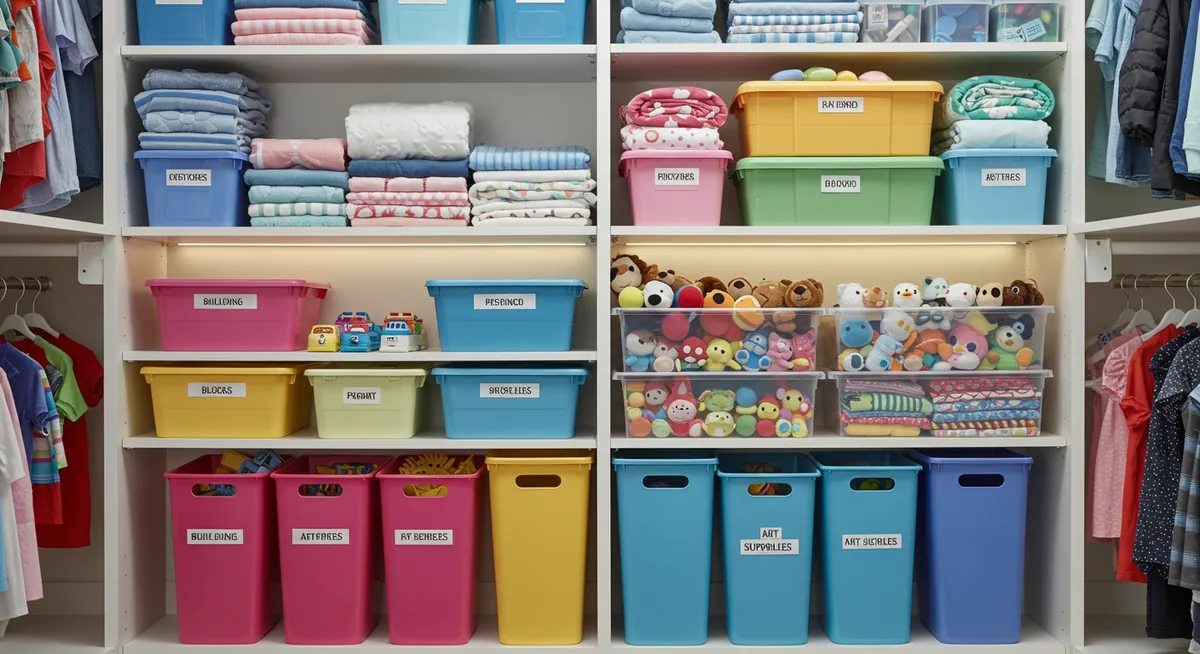
Daily play:
- Easy access
- In main living space or bedroom
- Rotated often
Rarely used:
- Stored in closets
- Higher shelves
- Labeled bins for easy ID
This stops overflow in main play areas.
How to Decide What Goes Where
Ask: Does my child play with this weekly?
If yes, keep it easy to reach.
If no, archive it.
Seasonal toys (beach toys, holiday items) can live in higher storage all year.
Toys with small pieces that pose danger to toddlers should be kept up high until younger siblings grow.
If storage areas like closets get crowded and dusty, keeping them clean stops hidden buildup from spreading into living spaces. For busy households, house cleaning service visits can help maintain shared family areas while you manage toy systems.
8. Use Furniture That Does Double Duty
Parents benefit from furniture that serves more than one purpose.
Examples
Beds with built-in drawers maximize bedroom storage without adding furniture.
Window benches with storage create reading nooks while hiding toys underneath.
Coffee tables with lift tops hide toys in living rooms. They look like normal furniture.
Cube units that divide rooms create zones in open-plan homes. One side faces the play area. The other faces the living room.
Why This Matters
Double-duty furniture cuts the need for extra bulky storage pieces.
This is extra useful in smaller homes or apartments where every square foot matters.
The Melissa & Doug toy chest has a slow-close safety hinge that stops finger injuries. It works as both storage and seating.
9. Set a 10-Minute Reset Rule
Toy storage systems work when upkeep is built in.
How It Works
Every evening:
- Set a timer for 10 minutes
- Everyone helps (including adults)
- Focus only on visible surfaces
The goal is not perfection. The goal is containment.
Why This Matters
Routine stops buildup. Ten minutes daily beats three hours on Saturday.
Consistency beats marathon cleanups.
Kids learn that cleanup is a normal part of play, not a punishment.
Make It Easier
Play music during cleanup. Use upbeat songs. Make it less of a chore.
Race the timer. Can we beat yesterday’s time?
Assign zones instead of tasks. You do the living room. I’ll do the hallway.
Conclusion
Toys will always exist in a family home. The goal is not perfection. It is containment.
The toy storage ideas that actually work share common traits:
- Keep systems simple
- Design for kids, not just looks
- Cut toy volume through rotation and decluttering
- Use closed storage where visual calm matters
- Build upkeep into daily routine
When storage works with your family instead of against it, cleanup becomes doable and your home feels calmer without feeling sterile.
Start with one change. Maybe it’s adding low bins. Maybe it’s creating zones. Maybe it’s just rotating half the toys into a closet.
Small shifts add up. Three years from now, you’ll have a system that feels natural. Not because you followed someone else’s perfect playroom. Because you built something that fits your actual life.


